Showing posts with label entertainment. Show all posts

Wednesday, January 7, 2015

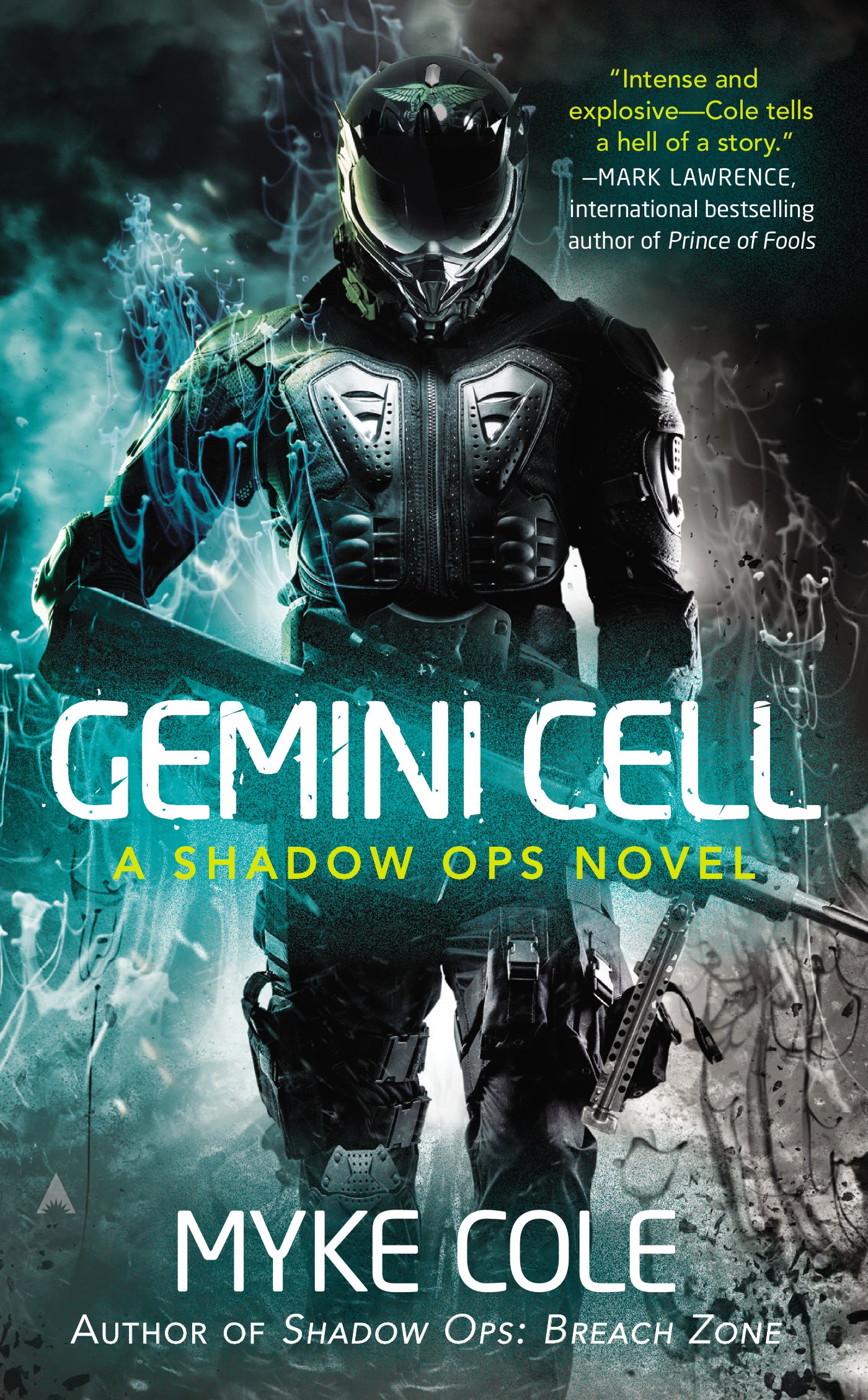
Myke Cole Hits Target with Gemini Cell

Set in the universe of his first Shadow Ops trilogy, Myke Cole's new novel Gemini Cell requires no background from prior books to enjoy. This was also true of his first trilogy's capstone volume, Shadow Ops: Breach Zone (reviewed here);  Cole has a gift for writing books that you can enjoy without additional background. That having been said, you should go enjoy them, especially if you're reading this while Gemini Cell is still a few weeks from release.

Overview
Gemini Cell is set in an alternate universe in which modern-day military technology and tactics meet paranormal superpowers poorly understood by the government (or by initially-oblivious citizens).  Unlike the first Shadow Ops trilogy – in which government regulations spelled out how individuals who manifested powers should register and be dealt with – Gemini Cell is set in the early days of the paranormal awakening that sweeps the globe, before the rules are clear, and before the protagonist has any idea what he's in for once he find himself "in business" with supernatural practitioners.

The fact that nobody seems to understand the rules governing the supernatural powers on display in the book means that the protagonist has little ability to tell when he's receiving accurate information about the limits and consequences of his paranormal predicament, when he's being fed a line of bull, or when he's looking at fools who have no idea what they're talking about.  This raises one of the major themes of the book: information quality.  The protagonist's work in a security-conscious military organization means that he's used to activity that is strongly intelligence-driven.  Once we begin to understand that all the information he has is doubtful – or  subject to limitations that impair its utility – we see that for all his personal power the protagonist is blind, unable to achieve his goals, because he needs credible intelligence on which to act.

Another theme is reason over passion.  Professional calm is presented as the only way to obtain useful results from violence; an antagonist demands impassioned indulgence of bloodthirsty urges as the price of physical power, creating an ongoing conflict.  Myke Cole illustrates the futility of seeking balance in a series of conflicts engineered to demonstrate that without care and control, violence has no utility at all to a civilized person.

More themes appear, but why spoil the story?

By planting numerous themes early and carrying them throughout the work, Myke Cole ensures the reader understand the problems they pose when they entangle the protagonist and complicate his conflicts. The result is conflict with more than the merely-physical dimension, and resolutions readers can care about.  This is a book well done.

Protagonist and Adversity
Gemini Cell is the story of Jim Schweitzer, a Navy SEAL who doesn't expect to star in a mashup between Revenge of the Ninja and Frankenstein mixed with a dose of Ghost.  From the back-cover copy, we know Schweitzer is going to bite it – and soon.  So we are kind of at the edge of our seats from the outset, expecting him to die at any moment, but hoping he'll manage to come out okay despite everything.

The story opens in an art gallery where Schweitzer wants to support his wife Sarah as she advances a few big steps in her dream career as a visual artist.  He knows Sarah expects him to flake out over work, and he assures her he's good for the night.  He really wants it to be true, too.  You know how this scene ends already, don't you?  It helps define Schweitzer, to ground him in a world that's larger than his job, and to establish both his values and the priorities with which he grapples.

Jim Schweitzer's plot arc in Gemini Cell may be complicated by his unexpected career as an unkillable (being already dead) special forces operator, but it's largely his confrontation of the first-scene conflict writ large: he wants to do right by his family – but since his death, his job's demands have only grown worse.  His desire to make good on his role as a father and husband is so obviously doomed (the "why" risks spoilers), but you can't help rooting for him – just as you hoped he'd manage to cheat the death promised on the back cover, even if just for another page or two.

Of course, questions overhang – how, exactly, did Jim get into this mess in the first place?  There's more to learn, and you can expect future volumes to satisfy hunger for answers.

Other Characters
The story isn't all Jim Schweitzer, or testosterone-drenched white men gunning down whole armies by one-handing belt-fed machine guns whose ammo chains never shorten.  Scenes cut between plotlines about Jim, and about people wondering what has become of Jim.  The supporting cast includes people who seem by the close of the book to be mostly good, and some whom we might be persuaded have become treacherous bad backstabbers fueled secretly by cackling villainy in an IV bag.  And they're not all male: Sarah proves to be a badass in her own right, and Jim's immediately-senior NCO is a Chief Petty Officer who boards target vessels with her team and shoots as effectively as she commands.  Techs in the unit Jim lands in after his re-animation are a co-ed lot, and guards appear in both genders.  Names and physical descriptions paint a full-color world with multiple nationalities and racial backgrounds.  Jim's best friend is Asian.

The supporting cast isn't just a cheering section or a mook squad.  Repeatedly Jim finds himself in positions in which his ability to act effectively turns on support from others.  It's not an ensemble cast, of course;  the story really is about Jim Schweitzer.  But it's not Conan – and in the twenty-first century, that's a good thing.

Darkness
As in prior Myke Cole books, Gemini Cell includes a lot of conflict that starts close to the heart.  Tension isn't presented purely by targets:  characters suffer internal conflicts, trouble with work, concern about information that's withheld from further up the chain of command, known and unknown betrayals by people in positions of trust or authority, and more.  Jim depends on his unit to support him following his re-animation, but can he trust what its spokespeople tell him?  The whole scale of revealed and suggested conflicts risks spoilers, but the fact the good guys live in a world of iffy intelligence and dubious loyalty makes the place a lot darker than military thrillers that focus more on the gung-ho aspect of unfolding neat military plans on an unprepared opponent, or manly men outnumbered and surrounded but fighting their way to victory with their backs to wall.

There are unprepared targets in Gemini Cell, of course … but are they all bad guys?  How would the good guys ever learn?  The book hits a few times on the ambiguous position of good guys who act (with finality) on information they know is incomplete.  They trust the information, and the instruction to shoot, even without the means to tell independently what treatment best suits each target.  This invites interesting questions.  What if the wrong people ended up in charge of the unit?  (Either one, really: the one he started in, or the one into which he was re-animated….)

Are the wrong people in charge already?

Well.  We'll see.  I hear the next one's called Javelin Rain.

Craftsmanship
On social media and in interviews, Myke Cole has revealed that he is not a seat-of-the-pants writer, but meticulously plans his stories and subjects his manuscripts to a grueling edit process that yields multiple successive drafts.  From his comments, it's clear the process is painful.  But from this end of the product pipeline, I can say this: it's worth it.

Cole knows where his protagonist must go and what mysteries he must unravel, so with careful planning he is able in this volume to set up and solve a one-book problem while laying the groundwork for the protagonist to advance into bigger problems that require the first volume's knowledge to solve.  There's no question that Cole's grueling production process yields a better-designed, better-paced work of fiction than one can expect to get from a less rigorous process.  For an example of another author who relies on a demanding planning process to engineer reliably outstanding stories, book after book, without painting himself into a corner or writing duds, consider Jim Butcher, author of the 6-volume fantasy series Codex Alera and the still-in-progress-after-fifteen-volumes Dresden Files series.  Jim Butcher's praises have been sung here since 2008.  It's about the craft.  Butcher's success proves rigorous process works, even after dozens of books, and Cole's universe is a wonderful place to see the result of this technique on display.  It's hard work, but Cole understands it's necessary.  And he's out there right now, hard at work on the next volume, suffering for your amusement.

Readers: you're in good hands with Myke Cole.

Conclusion
Cole's universe is populated by characters with interesting internal and external conflicts that are easy to get interested in seeing resolved.  People who worry about picking up a series' first book out of cliffhanger-dissatisfaction concerns need not worry.  Gemini Cell closes the story arc on which it opens, and it feels done when it closes.  Sure, the characters identify some doorways for later books to breach, but rather than detract from the work this builds anticipation for the character’s development.  The climax puts Jim to the question he's needed to answer from the first chapter, and sets him on the path to solve the problems he's unearthed on the way.  It’s a good day.

And it's fun.  After the initial anticipation to see the back-cover discussion of Jim's death play out – turns out, he’s tough to kill – readers enjoy a long sequence in which the action and suspense in the two main plot threads make the book hard to put it down until the end stands in sight.  Unless you enjoy losing sleep, pick it up early in the day.  You've been warned.

Myke Cole’s Gemini Cell offers an exciting story about a new character with a novel superpower-problem, set in a universe he's had three other books to understand fully enough to embed a mystery that will take another couple of books to solve.  I look forward to those books – and so will you.

(For those interested in an interview with Myke Cole, try this one, on which the author says, "I love new and unusual questions."  Also, his mother read it and said, "What a great interview!"  So read it, already.)

Sunday, August 24, 2014

Ready Player One, Reviewed: Yummy '80s Nostalgia Feel-Good

Ernest Cline's Ready Player One is a feel-good rags-to-riches '80s-nostalgia quest set in a dystopic future and the immersive alternate reality in which its residents transact most of their online existence.  The story is a sort of Brewster's Millions meets Charlie and the Chocolate Factory.  Unlike the protagonist of Brewster's Millions, the narrator isn't predestined to get a crack at inheriting – he's in a race against everyone else looking for the dead man's loot.  As in Brewster's Millions, he's beset by cheats looking to sabotage his quest in their own self-interest.  Worse, the route to victory is much less clear than in Brewster's Millions – in that book, it's at least evident how one should behave to accomplish the mission (also, Brewster's Millions has  only one contestant).  Ready Player One presents a multiple-stage quest driven by riddles that depend on knowledge only dyed-in-the-wool geeks steeped in '80s lore could possibly unravel.  The payoff? In the tradition of Roald Dahl's Charlie and the Chocolate Factory, the prize is fantasy-land itself, and the right to run it.  The end echoes Brewster's Millions: the hunt for the "Easter Egg" hidden in the VR universe forces the narrator to immerse himself in a pretend world that ultimately teaches him he must live in the real one.  It's an uplifting story made all the more hopeful by the miserable dystopia in which it's set.  Loved it.


Sympathy for the downtrodden protagonist is built quickly enough that the occasional, hefty block of multi-paragraph infodump worldbuilding is easy to accept in what feels an earned confidence the story is worth the effort.  The sense of infodump was greater on re-read than on first pass; much is also historical trivia that can be fun to experience in the context of the '80s-nostalgiafest that is the in-game contest.  And some is really unavoidable: historical computer game details and how to exploit their bugs turns out to matter, and the reader can't be assumed to know the huge variety of '80s trivia the protagonist has amassed in order to master the in-game quest.  Several scenes clearly show the author intended a specific image appear in a film adaptation, but this break from storytelling to film direction doesn't come often enough distract one too badly from the story.  And maybe they won't distract you enough to push your head from the story as they did me.  Maybe you'll like them.

The book is a fun read.  Loaded with pop cultural references, it's hard not to giggle eventually even at such things as the names of VR planets.  Anyone who grew up with computers from the era of text-based games will adore the competitions laid out before the characters.  I can't say what people will think about the story that haven't lived through the '80s, but the book's nonstop celebration of fandom will appeal broadly to those for whom music, movies, or games ever formed an important facet of life.    A strong female character is revealed early on – and not simply to rescue.  Although some late-appearing pro-gay and pro-minority elements have a bolted-on feel, the gender equality is baked-in and can be tasted throughout.

Part of the story's triumphant feel comes from its Cyberpunk sensibility, depicting individuals awash in a sea of overwhelming social and corporate powers that seek to crush them into industrial lubricant – the perfect place to showcase human triumph at the individual level.  And that's part of the book's charm: it doesn't depict Conan (or even Molly Millions) wiping the floor with corporate goons, it shows individuals working for a common cause – as individuals – to triumph personally over the dehumanizing social machine.  In an interview on urban fantasy, author Jim Butcher pointed out that Mark Twain advocated a formula: for every plausible-feeling fiction the author must mix two parts truth.  Ernest Cline provides, first of all, a plausible environment – who doesn't believe people flee their real-world lives for an online experience even now? – then populates it with plausible villains.  The corporation seeking control of the OASIS online system evidences motives and intentions readers will find extremely plausible in the current age of targeted advertising and e-snooping.  The fact that it also turns out to be a credit card company that collects debts using indentured servitude none are expected to repay simply mines history for mining towns, company stores, debtors' prisons, indenturement, and a host of other real-world evils that aren't hard to imagine returning to vogue as individual rights continue to erode.  Half the setting's feel comes from the fact there's no effective government to keep wrongdoers in line – precisely why the online OASIS is crucial to preserve: it's a place a benevolent omnipotent caretaker is not only possible but has become (at least in the fictional world) necessary.  The dark world is close enough to the one people know – or at least, the one they fear coming – that it's an easy sell as a future setting.  The plausible dark future and its plausible greedy villains are a perfect place to put good-hearted people in jeopardy in order to prove their mettle.

And save the Universe.

If you spent much of your formative years in the '80s, you must read Ernest Cline's Ready Player One.

Thursday, July 17, 2014

Noriega to 'Black Ops II' Game Develpers: "Show Me The Money"

Deposed Panamanian strongman "General" Manuel Noriega, who ran death squads and torture operations for years in support of his dictatorship and the drug operations from which he profited, became an international headline when he holed up in the Vatican embassy while it stood besieged by American forces bent on his capture.  His villainy has been so well documented that he's been immortalized as an adversary in Activision Blizzard's Call of Duty: Black Ops II.  Naturally Noriega, who has languished in a Panamanian prison since his 2011 extradition, has filed suit to share the proceeds.

On the one hand, what a system: everyone gets a crack at justice, even proven murderers.

On the other hand, what a farce: he's internationally reknowned as a corrupt dictator who clung to power through a program of murder and intimidation, and whose downfall followed not his murder spree at home but his soured relations with back-room kingmakers at the CIA. The craziest part of the story is that Noriega says Activision Blizzard somehow had the power to damage his reputation.  Really? Can a reputation possibly be worse?

On the bright side, the defamation case is a sure loser.  As a public figure being lampooned for entertainment in the subject area in which he's famous – in a game – it's doubtful that it's possible to maintain a defamation case under U.S. law.  Even straight-up news sources could plausibly defend such a suit.  The more interesting question is whether using the likeness of a living person for profit might entitle him to damages under the kinds of legal principles that allow the heirs of Elvis Presley both to make fortune in photo licensing and restrict republication of Elvis' image during the fat years.  The Jaded Consumer will report back.

After all, who doesn't like a good train wreck?

Thursday, January 2, 2014

Once More Into The Breach

Myke Cole's newest Shadow Ops novel Breach Zone is the first of his work I've read.  For this reason, the reveiw focuses on Breach Zone as a stand-alone novel rather than viewing it as the continuation of a series (which – review spoiler – the book was good enough to inspire me to read).

Overview
Drawing from personal experience with military and law enforcement, Cole paints a nightmare in which police objectives and military objectives become intertwined with personal liberty issues that provoke insurrection in a dark alternative universe in which individuals stand at risk of spontaneously manifesting potentially uncontrollable – and in some cases, outlawed – superpowers. Since people can't pick the powers they manifest, insurrection ensues.  In the Shadow Ops universe, insurrection can be supported not only by personal superpowers but mythological races and Apache gods bent on objectives less noble than liberty and justice for all.  While Myke Cole's newest work involves characters and events a new reader can tell have appeared in previous novels, readers have no trouble picking up not only key characters' motives and back-stories, but can easily find and follow the characters' nuanced and conflicted relationships with each other, their society, their government, and those with whom they work. Another set of divides that's interesting to see explored are the ones between military and law enforcement, between military and civilian command, and between supers who conform to the laws governing supers and those who can't or don't.  New readers can follow those just fine, too. The Shadow Ops world's a complex place full of ugly contradictions.  Myke Cole paints a portrait of the characters and their environments that make it easy to understand the motives behind every scowl and slight.  It's a thing of beauty.

Billed as a military fantasy, Breach Zone doesn't read like the worshipful documentary of a military venture. The book is sympathetic to the antagonists:  the believability and sympathy of adversaries' motives, for example, makes Scylla's personal tragedy much keener than if she'd been crafted of enchanted cardboard like certain other fantasy villains Who Must Not Be Named.  It's hard not to root for her redemption.  The train-wreck laid out for the reader is an exciting tale of inevitable and avoidable but utterly wasteful destruction – tragic but hopeful – and it's a great ride. 

Out of Order Reading
To read Shadow Ops: Breach Zone before the earlier Shadow Ops books is not only possible, but enjoyable. Some of the terms used in the Shadow Ops world – a Probe isn't a measuring tool – won't make sense for a while unless you start with the Appendix (which gives a little world overview), but even world-specific definitions eventually become clear without resort to the Appendix.

Shadow Ops isn't an episodic world in which books don't affect one another; events have a chronology and the outcomes of prior books clearly affect events in Breach Zone. The biggest risk in out-of-order reading isn't confusion but spoilers: characters' backstories are intertwined with the events of prior books, and the aftermath of earlier conflicts forms the basis for current attitudes and current problems. So, reading Shadow Ops first tells you how prior books' main conflicts shook out and who lived.

But if you can read Breach Zone and can't lay your hands on Myke Cole's other works yet, don't despair: you can enjoy it just fine.

Why You Want To Read Breach Zone
Military thrillers often stand on plot to hold readers, and play on your appreciation of military values to give you the feeling that the story succeeded. Sacrifice is powerful and emotional and writers can pull quite a bit out of it. It's expected to see use of the theme in a genre where it's a major feature of the cultural landscape.

But it's not every writer of military stories that shows character development. Sure, you often see a character moving from fear to aggression, or doubt to confidence, but how often in a military story do we see characters transforming in meaningful ways that show their values and beliefs?  The death and darkness overshadowing the bulk of Breach Zone is redeemed in the many transformations that suggest to the reader that everybody – even minor characters who die horrible senseless deaths – is capable of change.  There's plenty of tragedy – people's decisions, seemingly inevitable results of their character and values, lead them to their doom on all sides of the conflict.  The joy in the book doesn't come only from one-liners, though it's got that;  for example, when the male lead demonstrates he can accept correction and obey instructions, his romantic interest tells him the fact improves their outlook. But Myke Cole goes beyond one-liners and high-stakes plot problems to say something about humanity: by showing so many characters changing, he shows us the uplifting possibility that people really can change for the better.

Then, there's the non-simplicity of the story.  Myke Cole depicts plausible-feeling people reacting to their immediate circumstances in sympathetic, plausible ways, without making anyone into a cackling caricature of crazy.  The sympathetic portrayal of nearly every perspective in the book necessarily highlights the complexity of the problems each wants solved – and the deepness of problems that won't easily be solved.

There's not just plot, and characterization, but character development. It's not just an exciting series of conflicts; it feels good to read. 

Happy Days (Content Warning)
It's a tradition at The Jaded Consumer to deliver gentle warnings to people who might not be part of the target audience for a book reviewed here. Inspired by readers who turned on Jim Butcher over religion for having the temerity to discuss the work of angels and demons with the same seriousness with which he wrote about the politics among the Queens of Faerie (and, I ask you:  where else will you find top queens but in a place called Faerie?), the first such warning was given for Eliza Crewe's debut novel Cracked, to alert readers identifying themselves as unwilling to tolerate depiction of religion in urban fantasy (Crewe's characters included earnest Templars in a modern crusade). The review for Steven Brust's and Skyler White's collaborative work The Incrementalists, by contrast, alerts readers who might risk apoplexy encountering real-world politics in their fantasy. None of these warnings is intended to slight the works; they're good books, and great reads. People who would avoid Jim Butcher's Dresden Files books over the appearance of angels or holy swords are missing out on all the fun that's erupted since praise was heaped on Butcher here over five years ago. But those who won't like religious content should know it's there, and go buy his Codex Alera instead.

That having been said, the consumer alert for Breach Zone is extremely tame. It's this: the book is optimistic.  And not in a little way.  In a deep way: Myke Cole depicts positive change in individuals as possible.  If you want a book in which the bad guys are just bad, and in which bad guys are ultimately crushed under the heel of the righteous simply because the righteous are smarter and faster and stronger and have better equipment – and you don't want to ask yourself hard questions about what the world would look like if the bad guys were as smart and as well trained and funded and equipped – go read a Tom Clancy novel.  Think about the villain who betrayed loyal troops to be massacred by drug lords in Clancy's Clear and Present Danger: he moves from a self-interested corrupt intelligence bureaucrat willing to throw fellow countrymen under the bus for a few bucks, to a self-interested corrupt intelligence bureaucrat who is willing to throw himself under a bus to avoid the public humiliation and drawn-out proceedings involved in his inevitable prosecution.  It's not a transformation, its the author celebrating a protagonist applying cruelty as justice to bully a caught-in-the-act bastard into suicide – with impunity, with the author's approval, and while the author expects readers to celebrate it with him. It's not transformation, it's public shaming.  There's no optimism on either side of such a resolution, only schadenfreude.  (Clancy's books still have rocking aspects; who else depicts with such detailed glee the complexity of modern military operations, and the relationship between intelligence assets and operators' execution of resulting plans?  Who else shows the great chess game of modern military decision-making?  Clancy's work has great merit, just not on the basis of its depiction of character transformation.)  Contrast Cole's Breach Zone, in which a key character's emotional relationship to society's different classes changes. The character's very concept of society's classes changes.  This is real transformation.  And Cole sells it: when it hits, it's easy to believe.  To believe that's possible requires a deeply optimistic outlook on humanity.

And (spoiler) this has a consequence: cooperation.  When you think of problems in which you notice government involvement and military action in the news, it's hard not to suppose that the cooperation that wins the day in Breach Zone isn't a better answer than some of the knee-jerk first responses that appear in the news.  So, maybe Breach Zone has some political content. But the real consumer warning is this: if you require a military thriller to have darkness, death, and destruction as its overhanging message, or if you require the big story in a military thriller to be the destruction of "enemies" because the "good guys" are just better, or if you can't swallow the idea there's a way to solve problems rather than just shoot enemies faster – this book may not be for you.  This book is best read by those willing to consider that humans can change for the better.  If you can't buy that, you might find it irritating.

So, there.

Conclusion
Myke Cole's Breach Zone is so complete on its own that knowledge of prior work isn't essential to understanding and enjoying it. But it's an outstanding advertisement for his earlier works to those who haven't read them.  It's clear that the reader's relationship with characters from earlier books, if fleshed out in through experience with them, could make the climax of the story more deeply resonant with readers. But it's perfectly capable of standing on its own.

And it's a delight.

Breach Zone presents a rare respect for every kind of character that exists in the story: civilian and government; military and law enforcement; super and normal; outlaw and posse.  The fact all the adversary veiwpoints are so believable – and their positions presented so sympathetically – makes the conflict and its resolution so much more enjoyable than plain-vanilla black-and-white tales involving constructed characters of pure evil and their necessarily-attracted protagonist opponents. Sure, Myke Cole also must construct his characters – but they don't have that stamped-from-the-mold feel one sees in characters made with less care. Cole's central characters have a "real" feel that's a pleasure to see and read.

Best of all, there are already two more to read.

Saturday, December 14, 2013

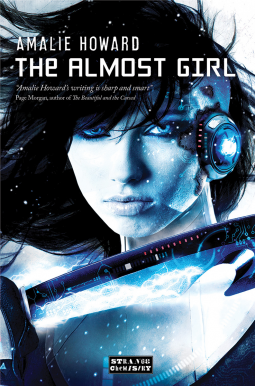
The Almost Girl Reviewed

From Chapter One, Amelie Howard's young-adult novel The Almost Girl effectively employs elements from the reader's own youth to give a familiar feel to an unusual teen's underslept, overscheduled life in a new school surrounded by people she neither knows nor understands in a world that has much bigger problems than the semester project she learns is half her physics grade. The disconnected teen we've known if not been becomes the building block for the reader's view into a coldhearted killer from another universe, sent here to blend with teens while evading military-designed fast-zombies – no, no, she says there are no zombies … but the commandos she used to lead before being given her secret mission are against her now and she must change gears rapidly from ninja warrior to vapid schoolchild as she tries not to lose her prize to other hunters.

Why To Read The Almost Girl

The strength of The Almost Girl is its use of what we already know to evoke our feelings. Who hasn't known tattling teacher's pets, naïve goodhearted victims, thuggish jocks, scowling and territorial popularity queens, and teens who notice with great force when an empty room has only a boy and a girl in it? The protagonist's alienness makes all the more credible her alone-ness, her separation from the rest of the world, the weight of what she's doing alone – things we've already sensed from the elements painted with the familiar experiences found in teen life. The fact the protagonist's stakes involve an inter-dimensional war and the life of a dying prince and so forth merely amplify and explain the anxieties and fears Howard paints with our own experience. Who hasn't seen – or been – a student called on the carpet before a teacher? Who hasn't been busted by a parent, smooching in a house thought to be empty? Come on, you at least came close. You've been there. You'll feel it, too.

You'll also feel the personal betrayal and guilt and pride and anger in the various relationships Howard provides with siblings, acquaintances, your best friend, incomprehensible parental figures, and seemingly everything else you did and knew as a teen.  Howard leverages this to great effect, so we feel the peculiar fear of being identified, caught, and punished each time we're led into another episode that echoes in our own lives.  Howard depicts relationships and interpersonal tensions with great mastery.  The author gently pulls the curtain on certain scenes before they go too far for a YA audience, or else fuzzes the camera so we don't get detail you couldn't notice through frosted glass, but this does nothing to impair our view of the conflicts that drive the story.

Howard appears to understand completely that what makes a story work is the characters, their conflicts, and keeping the reader in sympathy with the plight of the protagonist. And make no mistake: this book is about the characters and their insecurities and triumphs in the face of shifting circumstances and relationships and allegiances. If the story closed on an unambiguous Happily Ever After, there might not be a sequel. But the narrator is ambitious and driven so, in a tragic tradition dating back thousands of years, risks the rewards she's fought to win in a bid to fulfill her sense of mission despite the apparently easy alternative of happy retirement.

To watch broken people try to make their way in the world, not knowing whom they can trust, is much more intriguing than many of the fairy-tale worlds assembled for book buyers. And it's exciting to read a yarn about people operating with limited information under pressure. It's easy to sympathize with the main characters. It's particularly delightful to find one's self liking so many of the characters who are in conflict with one another. The Almost Girl is a fun read, and the perspectives from which it draws are surely as accessible to those who are still struggling through their teen years as to those of us who see them only in a rear-view mirror.

Content Warning

It's a tradition at The Jaded Consumer to provide a content warning to readers who might be set off by contact with some pet peeve that might not be revealed in a cursory overview or a read of the back-cover copy.  Content warnings don't imply a book isn't a good read – but what book is for all people?  Eliza Crewe's Cracked was extremely hard to put down, though its review included a warning for people who want their urban fantasy without central, overt religious content of the sort that began bothering a small set of Jim Butcher's readers some years back once The Dresden Files got underway.  The review of Steven Brust's and Skyler White's The Incrementalists notes that readers unwilling to tolerate real-world political commentary in their fantasy might want to look into the authors' politics before delving in.  They're wonderful books, but like Neil Gaman's shirt says,  
de gustibus non est disputandum. (There's no accounting for taste; literally, "there's no argument about the hors d'oeuvres." The brain cross-section shirt really gives new life to the old quote.)  As with the review of The Incrementalists, effort is spent to prevent this section from consuming undue space.

The Almost Girl is a book is about people and their relationships and their conflicts.  It is not a book about technology or security.  If you are a hard-core sci-fi fan who expects to experience shakes if high-tech super-suits from another Universe turn out to use halogen lamps for external illumination, or you think you will be unable to read further if that civilization manufactures thermometers that show temperature measurement that make senses to those of us who grew up using the Fahrenheit scale, you may want to think carefully before upsetting yourself. If you're a military reader with unshakable convictions regarding sentry removal techniques or security procedures, you may need to take a chill pill before getting too far into The Almost Girl. The cover evokes a delightful cyberpunk vibe, and it may attract scifi readers with demanding expectations regarding the made-up gadgets and technologies that inevitably color such work, and it is to some of these folks to whom the warning is largely directed.

Unless your OCD is out of control, or you have a special peeve involving the above, you should enjoy the book juuuust fine.

Conclusion

The Almost Girl uses an impending inter-dimensional war – and the need to keep ahead of a dimension-shifting cadre of conscienceless fast-zombies in supersuits (but no, says the narrator, there's no such thing as zombies) – to raise the stakes on a plausible-feeling teen suffering otherwise ordinary-looking stresses involving boy/girl interactions and siblings and parents and classes and teachers.  There's lots of action, to be sure. But the best gem in The Almost Girl is the work we all have in life, to find a place for ourselves however crazy it gets.  Amelie Howard's world is just painted a little crazier than yours.  It's worth a visit.

Wednesday, September 25, 2013

Review: Crewe's Cracked

Eliza Crewe's new novel Cracked kicks off a series whose protagonist Meda has an appetite for eating souls. Well, life force, at least.  As one might expect, she promptly meets people not particularly excited about the protagonist roaming free, sating her appetite without oversight.  But the story is not just a getting-away-from-capture tale; it's Meda's journey to discover the world about her and its perils, and to learn what she is and where she came from.

Meda's snark, sass, and disinterest in traditional hero activities make her an entertaining departure from the evil-vanquishing fantasies we grew up expecting.  She's perfectly happy to attack from behind or kill those she's rendered helpless, and she's unafraid to admit these things to the reader even though she's very careful to hide the truth from those she meets.

The book doesn't depend on the novelty of a killer protagonist, though.  The hungry huntress has been long depicted in vampire fiction, after all.  But Cracked doesn't give off a vampire vibe;  there's a much closer parallel to Meda in character feeling. It's not far into the book that one is tempted to think about Jeff Lindsay's Darkly Dreaming Dexter and its protagonist's similarly insatiable need to murder.  Sure, Meda and Dexter are driven differently.  But how differently, really? Each is subject to an awful compulsion to kill, and neither perceives much of a choice.  Each plans with patience, and takes a certain delight in the work.  Both appeal to the reader in part because they've initially resolved to hunt only confirmed bad-guys. Both confront circumstances in which it'd be terribly convenient to kill a witness for convenience.  And both have a keen interest in avoiding capture because neither has any real expectation of being vindicated if caught.  Both begin basically alone, unaided in the fight to remain alive and free while sating a hunger that inspires vicious crimes.

But Meda and Dexter Morgan have very different journeys.

In Dexter, the humor is largely carried by the narrator's obliviousness to human feelings. Not so Cracked.  Meda, the narrator, is well aware of how humans feel – she feels it all herself.  Instead of inspiring laughs with an oblivious confusion over the meaning of human interactions, she entertains readers with a combination of remorselessness and deep empathy with her victim.  She follows this with shameless readiness to display over-the-top manipulation of musclebound males who want to believe she's "good" inside.  The real good guys, out to destroy soul-eating evildoers everywhere they can be found, end up eating out of her hand.

Muhuhahaha.

If this were all Cracked offered, it might end at a fun romp.  But it doesn't.  At seventeen and lonely, Meda ends up genuinely connecting with some of the companions/adversaries/friends she meets.  The complexity of their relationship provides readers good fun.  Meda's desire to learn who she is and what the forces are that seem arrayed against her is a convincing basis for her willing (and overconfident) acceptance of an adventure that turns out to be much more than she expected.  On the way she learns the difference between people who like her and people who understand her;  she grows as she feels for herself how friendship, values, and love make life worth living.  A loner, Meda's sucked into circumstances that require her to trust or die – and to inspire trust or be destroyed.  Meda learns to be the human she pretends.

In that way, Cracked is a supernatural fairy tale about what it's like to be normal, and how magical it is to have a friend.  It's easy to cry reading it.  When the hour ran late, I had a hard time putting it down. I think readers will enjoy it.

[spoiler] Content Warning: Religious Belief
Cracked Cover in IndiaSome fans protest loudly when an urban fantasy author includes elements of mainstream religion without immediately punishing proponents of such beliefs for foolishness or the like.  For example, Jim Butcher's The Dresden Files contains a cast of characters that includes Christians whose faith plays a significant role in their lives and their superpowers; the series eventually depicts supernatural beings that are fallen angels, demons, angels in good standing, etc. I kidded in a review of Butcher's work that complaints about religion in urban fantasy were hard to credit in the midst of a story that treated with equal seriousness subjects like the Laws of Magic and the politics among faeries. But, beware: readers who were irritated with Jim Butcher over theological commentary may find themselves extremely exercised as Cracked progresses.  Sure, it opens on an irreligious murderess occupied at the task of luring a victim into her trap, but it's not long until the author begins depicting The Battle Between Good And Evil, complete with demons and holy warriors.  Although this also occurs in The Dresden Files, this development occurs over the course of several novels;  it happens much faster in Cracked – and doesn't have wizards and vampires and faeries to distract people from the religious aspect of the underlying conflict.  The book's cover in India (on right) gives better notice of this.  (Both covers are available on the author's press page.)

I'm not particularly fond of reading material designed primarily to appeal to religious convictions, but I tolerated The Chronicles of Narnia and love The Dresden Fines. I had no trouble enjoying Cracked.  If you gave up on The Dresden Files over religious content, though, Cracked may not be your cup of tea.
[/End Spoiler]

BONUS: Cracked vs. Dexter
It's tempting to say Cracked differs from the Dexter novels in being urban fantasy.  But is it true that Dexter is not urban fantasy? Lindsay's third book [SPOILER for Dexter, not Cracked] Dexter in the Dark outs Dexter Morgan as the vessel of an immortal being related to Moloch, the ancient deity who sacrificially consumed immolated children, and whom the Israelites were eventually barred from propitiating.  So Dexter Morgan is ultimately depicted as possessing supernatural powers on loan from an ancient unkillable psychopathic intelligence to which he plays host – it is this that is his Dark Passenger.  Without his Dark Passenger, Dexter just isn't the cold calculating killer we knew; he's uncertain, lost.  But for the reader of the Dexter novels, this development doesn't result in the feeling of Urban Fantasy; it's a crime thriller.  Only, reversed: the "protagonist" is the serial-murdering psychopath trying to avoid capture by "normals" whose motives and moral decay make them less honest and more offensive than many of the criminals they pursue.

A problem of this nature faces the narrator in Cracked, too. Unlike Dexter Morgan, Meda seems to like having friends – and not just as camouflage. But she's fallen in with a bunch of evildoer-hunters who don't seem likely to embrace an addicted soul-eater with no hope of being reformed … and these new companions include people who'd apparently be perfectly happy to kill her for thrills. (Or misdirected vengeance? Or zealous rage? Meda doesn't review their psychiatric records once she takes their temperature.).  Like Dexter Morgan amongst the Miami P.D., Meda among her new companions seems continuously at risk of discovery and destruction.  The fact that she feels emotions and can have human interactions, like normal humans, makes her more sympathetic than Dexter Morgan, whose support from the reader seems generated largely by a combination of (a) a conviction the other monsters are worse, (b) a hope his hunts will safe the people about whom readers care, and (c) a perverse thrill at rooting for – let's face it – a dyed-in-the wool villain.

Craft Notes
As one who writes (though mostly not fiction), I was interested to see a tale told in present tense.  As I've written short pieces in present tense, I appreciate both its limits and the gymnastics occasionally required to make sure the reader can see everything the author requires to follow the story.  Doing a novel like this, breaking into past only for reflection on the past or where characters would use the past in dialogue, is impressive.  The limits of the first-person voice and present tense are interesting constraints in which to work – and it is work.  I did spot one past-tense verb committed by a late-appearing character during the denouement, but it's not a cheat on the decision to go present tense: it's almost assuredly an error.  Everybody gets a couple.  This is no big deal.  And it's probably easy for the reader to miss entirely.

The front cover of the ARC warned that reviewers should not review on the basis of seeming errors, and should check that text didn't change in final before reviewing on the basis of the ARC text.  Unfortunately I've been unable to get the busy editors to respond to my email.  They are, you know, busy putting out books.  It's not like I can gripe.  So I don't know whether a continuity concern in the first half persists into final.  What I do know is that while it's not unexpected to see some kind of issue to pick at in a first novel, it is unexpected to find myself unable to put down someone's first novel down at 1:38 AM.  So you can see the net effect of my "concern" didn't impact my interest in finishing it. 

Conclusion

Cracked sets up a series about character redeemed by her friendships, and grounded by the people she values rather than by rules (which she doesn't).  It depicts a world in which The Forces of Good depend on teenage reprobates skilled in slipping locks, breaking and entering, and clipping fence-chains on others' property.  God help the people.

Cracked is a fun read.  The sass, the frienemy-ships, Meda's heartless manipulations of others and the ever-present risk of being caught – all fun. The big battle's turning point is foreshadowed hard enough to make it not only easy to believe, but to have readers dying to see the characters put in a position to pull it off.  This prevents it from constituting a surprise twist, but it builds good anticipation for the moment of choice – will the characters trust each other enough to try?  Or will feelings of betrayal poison their prospects? So non-surprise is not a problem: predicting how the tables will turn isn't really what the show is about.  The show is about what choices Meda will make when it really counts, and why.  And whether, in the end, she's learned to be human enough to love.  The consistency concern I have doesn't detract from the climactic choice or how it is made: events leading up to the scene plausibly place all the characters in a plausible position of doubt and desperation so the reader sees the right choice isn't easy (and why the easy choice is useless).  There may be bumps on the road, but the journey is enjoyable.

I'm happy I read Cracked, and look forward to Eliza Crewe's next in her soul-eaters series.

Tuesday, September 17, 2013

How I Spent A Night Addicted To Crewe's Cracked

This is The Jaded Consumer, and I'm a book addict.  Heh.

I've written a review of Eliza Crewe's Cracked.  My review was longer than the "I loved it" at The Book Smugglers, but mine's not up yet. The ARC on which mine was based contained a warning about the possibility that changes might appear in the final version, and to check with the publisher before reporting on certain things.  So, it waits while I wait for a response on some questions to the publisher about whether certain elements were altered in the final version.

But I can share that I couldn't easily put it down.  Sure, I managed to do so long enough to feign normalcy in connection with some social obligations, but it didn't take.  Unwillingness to stop reading at 1:38 PM gets you a different look than does unwillingness to stop reading at 1:38 AM, which is when I noticed the time.  Not that I was done yet.

Cracked didn't brook interruption well.  I have a longer review coming, but the short answer is that it was a lot of fun.  The Book Smugglers has a few days left on a Cracked book giveaway, so if you like urban fantasy you know where to go.

Tuesday, September 10, 2013

If You Clap, Tinkerbell Will Beat D.C. With A Clue Stick

Granted, my relationship with Harley Quinn is grounded in the televised Animated Series.  And granted, I'm not one of the people to whom D.C. is selling its attempted-suicide issue of Harley Quinn.  But D.C. has probably reached a new low in trying to raise awareness of and interest in its comics by inviting fans to submit naked-suicide-attempt-preparation drawings of The Joker's madcap minion.  Since it's asking for submissions of four suicide scenarios, it's likely these panels represent alternatives she will reject in favor of a more direct strategy to confront the source of her ills. Like, say, ditching The Joker to take off on her own as a freelance villain, which would explain why there's a new Harley Quinn comic coming.  But the eye-rollingness of delivering Harley Quinn fanservice in the form of her naked body in a bathtub situated beneath an array of power-on toasters, blenders, blow-driers, and preparing to pull the drop-cord ... it's in outstanding bad taste even for an industry already so famous for unrealistic fanservice poses that it's got a lampoon blog all its own.

Some fans are, not unexpectedly, put out by D.C.'s latest tasteless gaffe.  The last link also illustrates D.C.'s effort to transition Harley Quinn from the lithe pixielike character who seemed to find a way to show innocent fun through all the awful crimes in which she was involved, into a hypersexualized object of the sort generally lampooned at Escher Girls. The start of the new comic – as a fanservice machine – isn't exactly the most auspicious way to start the series.

Re-envisioning the slight Harley Quinn as a valkyrie with a man-crushing hammer and a big bust bursting from her brassiere is, to me, all the promise this reader needs that the comic's gone wrong.  We've already got butch babes in Wonder Woman, She-Hulk, Red Sonja, and a whole host of others … why not let the one clever little girl show the world what clever is worth?  Why not have a comic book that busts its chops to be … you know … comic?

But, no.  D.C. has made a marketing decision that girls must bear big boobs, and she's got to be naked in the bathtub as soon as possible.

Gah.

Why We Have Divorce

Nobody goes around claiming to be pro-divorce, but there's a reason no-fault divorce is an important right.  The couple in Montana whose marriage of one week was terminated in a clifftop homicide should be a lesson why people need to understand their options.

No guns. No drugs. Just "reservations" about being married that led a woman to text her friend "Oh well, I'm about to talk to him" then "But dead serious if u don't hear from me at all again tonight, something happened" before she shoved her new husband over the cliff to his death.

Of course, that's according to the criminal indictment. Time will tell.  But … seriously, people.

Thursday, August 22, 2013

Jim Butcher Update from Space City 2013

I've reviewed several of Jim Butcher's books with what may be all the apparent objectivity of a fawning fanboy (but really, they're great).  But this blog is about what's offered to consumers, and he consistently offers a solid product.  Of course the good news gets reported with the bad.

The current news? At Space City 2013, Jim Butcher confirmed that his September draft deadline for Skin Game will be met with a September-ish submission, making for a year-end or early 2014 publication date.  Also year-end?  The short-story from the point of view of Harry Dresden's apprentice Molly, excerpted here, will finally appear in print December 3, 2013 as part of the George R.R. Martin-edited anthology Dangerous Women.

Thursday, May 2, 2013

Butcher Announces Next Dresden Files Title

At Jim Butcher's web site, the title of his next book in the Dresden Files.  There's a reason this series' main character is in the sidebar on the right, and if you look at some of the reviews I've written here about buy the first of his books you'll get an idea why.

The next title is Skin Game.  At the time of this posting, there's no content there other than the title announcement. When Ghost Story ended, we knew what was happening next and it was easy to interpret the next-announced title Cold Days.  (The first time I read the title announcement on that one, I was sure it was Cold Day, which I liked even better. I wonder whether I was mistaken, or why it changed. Alas.) But the end of Cold Days left enough to happen next that it wasn't evident where it'd pick up, making the interpretation of the title more of an adventure.

But I'm keeping my theories to myself.  I wouldn't want to spoil anything for an unsuspecting reader. But you can always email to share theories about Dresden :-)

I especially won't spoil things in previous books, like what Butcher must be teasing regarding the name of the oldest queens of Summer and Winter. Muhuhahaha! And so we wait for the publication of the next Dresden book – let the suffering begin!

Sunday, February 17, 2013

Olymipc Masters To Dump Wrestling?

The International Olympic Committee – the folks who've brought us all those wonderful bribery scandals and outrageous outcomes in judged events over the years – has apparently not been paid enough by the advocates of traditional, old, Classical-Olympics-era sports like wrestling. So, effective 2020, they're dumping it.

Wrestling isn't a high-tech sport requiring lots of infrastructure to practice; it's accessible to people who have nearly no means at all. Countries can be competitive despite small size. Wrestling is exactly the kind of sport we want to see – a sport that rewards athletes, not high-dollar sled design or high-tech equipment. Wrestling isn't made easier with slick suits, and you don't need expensive facilities to practice.

Wrestling is a real man's sport – a a real woman's. Wrestling is, in a nutshell, exactly what the Olympics is about.

Like Mike Downey says, Don't drop wrestling from the Olympics.

If low-overhead individual sports like wrestling are dumped because they lack star power or don't have enough sponsor funding, the result isn't hard to imagine. The Olympics will become indistinguishable from franchises like the NBA and Pro Golf and the numerous purveyors of equipment and dietary supplements for triathlon competitors. Sport drink vendors and apparel brands will dominate an event that should be about the struggle and triumph of individuals and teams. The Olympics will end up a collection of games athletes can't crack without access to elaborately manicured golf courses, or years-long basketball training programs complete with modern facilities and big organizations of teams to ensure regular inter-organization competition and maintain year-long funding for the marketing machines needed to sell tickets and apparel needed to keep their back-end operations running, or essential funding for engineering teams needed to keep aerodynamic and steering technology in the same league as competitors' in sports involving boats, bicycles, sleds, and so forth. Resources rather than skill alone will determine who can walk in the doors of the games. What a sad world is that.

Wrestling is so traditional that its ejection should be immediately viewed with suspicion.  Its requirements are so basic, and the nature of the competition so tool-free and fundamental, that it should be viewed as democratizing a Games lately dominated by equipment-driven performance analysis (ever notice who's in the diving and ski-jumping competitions?) and equipment (who's in the final rounds of the luge and bobsled events?).

Unlike basketball, soccer, baseball, and other sports the Olympics plans to retain, the international wrestling bodies actually use the Olympics to identify the world champion wrestler. Bicyclists and triathletes and marathoners have other world-profile events with which to select their leaders, but wrestlers actually use the Olympics to name their world champion.

Shouldn't wrestling get a break?

It's hard to believe the IOC isn't kicking wrestling simply because it's not able to sustain the kind of bribery that drives favorable rulings from the IOC and its subordinate bodies. If wrestling poured more cash into IOC coffers, we'd never see this kind of thing.

Tuesday, February 5, 2013

Mercedes Dome: Same Electrical Problems as the Car

When I saw the "Mercedes Benz Superdome" go dark during the Superbowl, my first thought was: how fitting. Mercedes' products have demonstrated awful electrical reliability of late, which is why L forbade me ever to buy another.

This never happens at the Toyota Center.

Butcher's Cold Days Rocks the Faeries' Casbah

I've previously commented on Jim Butcher's Dresden Files series on this blog. "Commented" may be a bit mild: the first post on Jim Butcher's work, Praise for Jim Butcher, has been read numerous times and continues to turn up week after week among the posts people still find in search engines and read. But since I have begun a different blog that relates to fiction, I have become somewhat torn whether to move Butcher blog entries to the new site, which deals much more closely with fiction.

This blog is dedicated to consumers. People who buy fiction are consumers. I think it's fair to evaluate Jim Butcher's latest work (and his whole series) as a consumer product – right here. Those of you who like are free to pretend they didn't see the title of this post, and pretend this is a hard-hitting critical evaluation of Jim Butcher's work. It is, of course. I simply conclude that the work is worth every penny, which is why I gave the latest book to my sister when the weather turned cold last year then harassed her as she continued to fail to install it on her Kindle and read it.

So, the review is here, under a pseudonym. Later when I want to suck up to Butcher in connection with my own work, this may be trouble. But here it is.

Past Is Prologue
Before writing Cold Days, Jim Butcher wrote quite a bit of other fiction in the same universe. While it's not strictly necessary to enjoy Cold Days – he explains enough along the way that it's completely edible as a stand-alone dish – these works do so much to build the universe in which Cold Days is set that one should really consider them. Since some of them are free, this is also an opportunity to test-drive the author. Works in the Harry Dresden Files include:
There are some more short stories, but I haven't seen them all yet. They include one from the perspective of his apprentice Molly, and several about work done for his client Bigfoot. Expect good things. But not for long: Butcher reported stopping short stories to focus on his novels.
Jim Butcher's secret – well, it's not a secret, but it's the sauce that makes the meal – is that the author knows where he's going. Unlike authors whose middle books sag, or who get lost in the weeds with characters (or, as in Dallas, turn prior work into dream sequences to fix mistakes), Jim Butcher's books and their characters all row in synch, moving the boat steadily and inexorably toward his goal. (That doesn't mean they're not in conflict within the books, but it means this activity is all consistent with the big picture, and advances the series as it advances each work.) Just as each book as a beginning, middle, and end – each of which feel like purpose-built performance parts fueled with nitro – so too does the series. Changes/Ghost Story served as the turning point of the series, and I expect the rest of it to feel very much like Cold Days: a wild toboggan ride, buffeted by the chill blast of Butcher's coldly-calculated and masterfully measured plot. The final three books, which are not expected to follow immediately but after some undetermined number of intermediate volumes, have unannounced release dates:
  • Hell's Bells
  • Stars and Stones
  • Empty Night
Based on comments elsewhere, these shouldn't appear until after about twenty of the novels are out. This doesn't mean you can't read now, though. They are quite unlike Connie Willis' delightful and deservedly-award-winning work in her "books" Blackout and All Clear. In describing these, I put the word books in quotes purely out of disdain for the plural: they constitute really but a single story, but it was brutally cut into two physical volumes. You can't pick up Blackout without All Clear at hand, or you will finish dissatisfied and furious. (I had both ready, and so was delighted by them. Don't risk a different path with these two volumes.) By contrast, each volume of Butcher's series really has a self-standing story worth reading in its own right. A person could read them out of order and enjoy them, though I suggest avoiding spoilers by getting them in order.
About Cold Days Itself
When the narrator wakes a few months after the curtain of Ghost Story, he discovers he really can't escape the choices he made in the last few books. And it isn't long until he's given instructions that make him absolutely certain he needs to get it right the first time when he decides whether he's going go obey them or not. Cold Days shows Harry Dresden trying to do his thing without depending on the people whose support he used to have before he joined the Winter Queen as her indentured-servant contract-killer.*

Naturally, this doesn't work. At all.  On my read, Harry lasts maybe ten minutes. Less, even. Butch as Butcher's protagonist is, he's still outclassed in the unending supernatural deathmatch tournament that is Chicago in the Dresdenverse.

Harry Dresden just can't go it alone against the kinds of forces against which he's pitted himself. Not with any chance at all of survival. This has been true since before the cataclysmic events of Changes, though Harry tries awfully hard not to imperil his allies as he did Michael by the end of that book. Dresden arguably got close in Turn Coat, but he ultimately involved his apprentice Molly and his faithful companion Mouse, and even hired a P.I. to take pictures of his hiding opponent. In Small Favor Harry inadvertently imperiled Ivy with her involvement, enabling awful consequences for Ivy and threatening every living thing on the planet with the risk of serious bad guys acquiring unthinkable power. In White Night Dresden risked his brother and all his mortal allies in an all-out assault on his opponents, while taking a chance on elevating the supernatural stature of Chicago's coldest and most calculating crime boss. In fact, Dresden's decisions have led him to depend on his allies (to their detriment) going back through all the books. The consequences echo even in the current work: the career path of his love interest Karrin, which Dresden inadvertently derailed when she came to his aid in Proven Guilty, is completely over. And his apprentice is on a hit-list. And to aid Harry's plans, his brother's love keeps a dangerous job in the midst of mind-bending immortals (at least, they don't seem ever to age).

So we find in Cold Days that the more things change, the more they stay the same.  This doesn't mean there's no excitement: it means that Dresden's efforts to go it alone are such abysmal failures that he's dragged back to his old practices. Though sadder but wiser, he's still scrapping with bad guys and getting delayed and dazed while looking for answers to immediate dangers while time ticks quickly on catastrophe. His new powers are cool (so very cool – but of course they would be; he's joined the Winter Court) but they're far too new to be under anything like Harry's full control, and they're woefully inadequate to address problems that require skill and will one can't get as a gift from faeries.

And as usual, Harry has a lot more will than skill. It's his problem in this book to come to grips with the forces trying to make him into something he loathes, all while he's unable to avoid the people he loves and whom he hoped to avoid injuring by leaving out of his future fights.

Conclusion
In my last review of Ghost Story, I wrote:
Ghost Story doesn't raise the stakes or excitement from Changes, but if you find a book that does you are commanded to post its title in the comments because I need to read it.  I'm betting it's a rough hunt for books with such bang.
In keeping with my own command, I am posting a link to Cold Days. (Note: I also explain in that review that without Ghost Story, the full stakes of Changes aren't really available to the reader; the two are too intimately connected, and so much better together.) Without descending into spoilers, Cold Days manages to raise the stakes on Dresden and his loved ones and the world while advancing the series plot along a critical plot arc first disclosed to readers in Storm Front over a dozen years ago. A character arc opened in Summer Knight is closed. Along the way we learn more about lots of characters who have long colored the landscape of the Dresdenverse, which is a sure pleasure for longtime fans. For those who aren't longtime fans, the book is a rocking ride full of betrayal, uncertainty, and a race – on several levels – against the world's death-clock.

And what an ending. So many people's lives turned upside down, so many people's relationships upended – so much to sort out in the next book. And – some hope for Dresden's deceased love life. Lots to build on for the next major mishap.

Like I wrote before, my main complaint with Jim Butcher is that he produces only one of these in a year or more. I acknowledge it's an unfair complaint – I haven't completed a single novel of this caliber, and I don't know anyone who has fourteen works so satisfying in a single series, or maybe even to their names – but honestly it's about the only complaint I can level straight-faced against this body of work.

If you like Urban Fantasy, you have to read it. Or fantasy. Or whodunit stories. In fact, if you like any stories at all, I'd be hard-pressed to do anything but suggest giving it a try. The uncertain can test out the free chapters or the full length (and free) Restoration of Faith, which Ghost Story entertainingly references.


======

*: Or something like that. At the curtain open, Dresden is still working out what his new job is and what it requires of him, but he knows what the last Winter Knight did and is sure it's an awful job more suited to monsters than to men. Which is why he worked so awfully hard to avoid taking it – the full extent of which we learn in greater detail in Ghost Story.

===

For a look at how the last Summer Knight died and how Harry was previously introduced to his current job, you can enjoy Summer Knight. It's a delight.


Wednesday, December 5, 2012

Save The Ninjas!

The last masters of ninjutsu won't be naming successors. Maybe because, as explained by grandmaster Jinichi Kawakami, "you cannot make a living being a ninja."

Monday, November 19, 2012

Book Vending Machine

If you've ever browsed a used bookstore, you'll love this.  Watch the video.

Monday, November 12, 2012

Aliased Filmmaker gets 1 Year for Parole Violation

Mark Bassekey Youssef was remanded to a year of incarceration and sentenced to serve four years of supervised release following his use of the alias 'Sam Bacile' in violation of the terms of his probation sentence in a bank fraud case.  Youssef used the alias while tricking actors into making a film that was overdubbed into the anti-Islamic piece infamous for its connection to the recent September 11 anniversary attacks and protests against United States diplomatic missions in the Middle East.  The probation had been conditioned on the fraudster's use of his own name to the exclusion of aliases.  The alias was likely immaterial to actors' willingness to participate in the project, however;  those who gave interviews said they would not have participated in the project if its actual post-dubbing dialog had been revealed to the actors.

Neither punishments nor charges have been brought in connection with the film's dialog or the deceptions involved in recruiting a cast.

Those that murdered Americans in Benghazi had motives other than the film.

Saturday, May 19, 2012

Lumia & iOS: You First. No, You.

The Siri virtual assistant and Lumia's voice-controlled search function each reportedly complement each other as the 'best smartphone ever'. Assuming Siri's results are coming (as they appear) from Wolfram, those results are subject to change. Of course, the next time the Lumia is updated, it's likely to have a new "feature" inserted by Microsoft's marketing department to control bad spin.

But for now, it's a battle of complements. You first. Oh, please; after you. No, I insist, really.

Gotta love it.

Tuesday, July 21, 2009

Something New Under The Sun: A Venetian Gondoliera

News of the first-time-in-its-900-year-history induction of Giorgia Boscolo by the venetian gondolier's guild as an apprentice gondolier -- the guild's first trainee gondoliera and the first ever in Venice -- reminds the Jaded Consumer of this specious but entertaining account of Venice's harsh gondolier exams and its controlling supervising body.

Giorgia's father, proud of his daughter but not a particular fan of female gondoliers, hasn't sons to which to pass his craft. Her husband, a metal worker and father of her two children, knows better than to stand in her way.

Sometimes the news is worth reading :-)

Thursday, May 7, 2009

Lightning Strikes Twice ... Or Even Five Times

A West Virginia Woman named Brenda Bailey has won a government scratch-the-ticket lottery five times since September. Wins ranging from $1,000 to $100,000 now total $167,000.

She plans to pay for her pets' vet bills and some home repair, but also intends repaying people who have helped her in the past.

I ordinarily view the lottery as a tax on those bad at math, but in Brenda's case ....