Showing posts with label novels. Show all posts

Wednesday, October 18, 2017

Brust's Vallista Reminds Us Why We Love Vlad

    Vallista presents a Vlad Taltos adventure set on Steven Brust’s fantasy world of Dragaera, is reviewed at Fantasy Book Review.

    Links to Brust’s swashbuckling parody-homage to Alexandre Dumas, The Phoenix Guards were removed, as was a link about Brust's his narrator from The Phoenix Guards –  the Dragaeran historian Paarfi – and the Paarfirotica written in his voice.

    Read Vallista, and be happy there’s seventeen more volumes to read in its world.

Wednesday, January 27, 2016

Review: Myke Cole's Javelin Rain

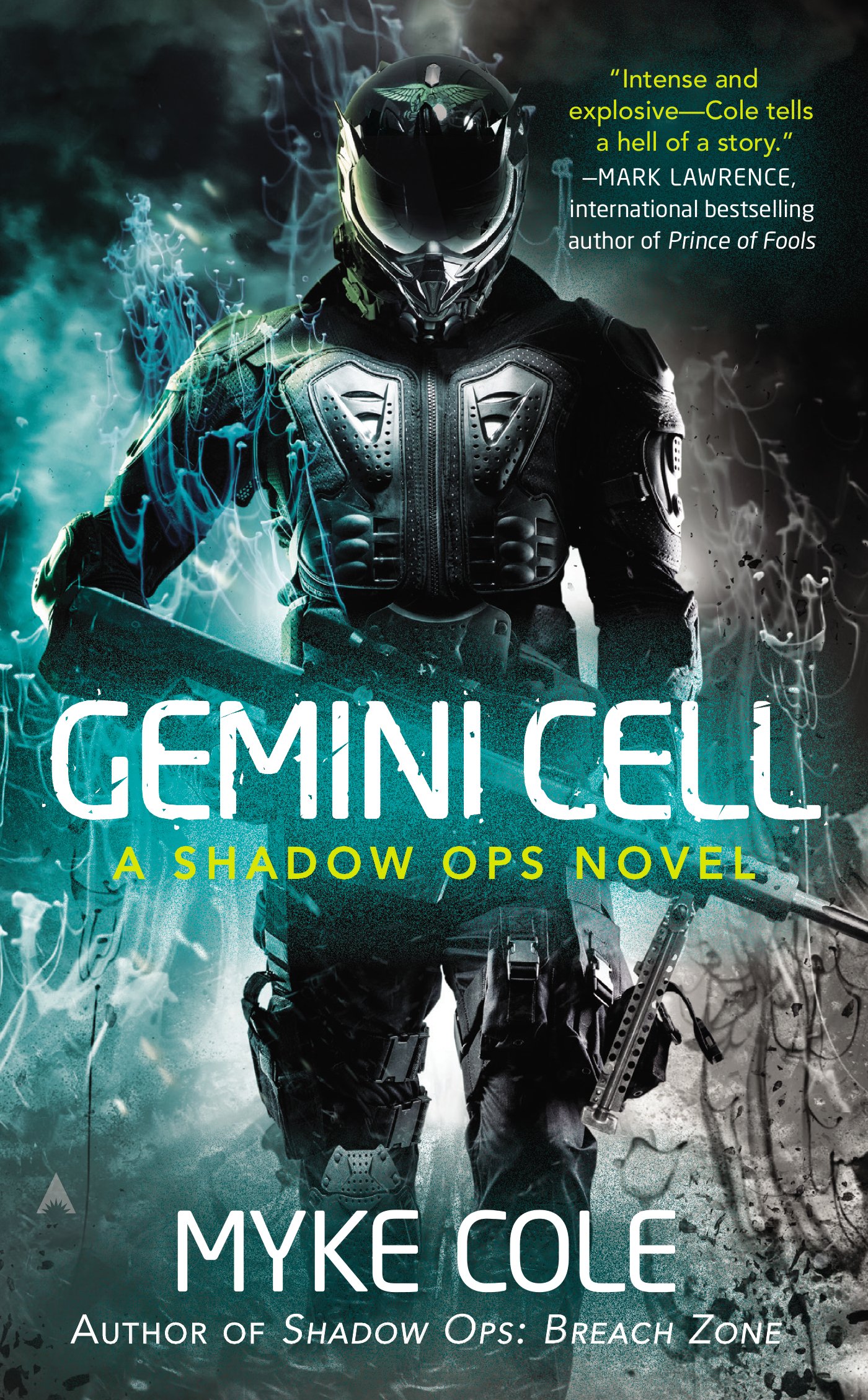
Myke Cole's military fantasy novel Javelin Rain follows Gemini Cell, and continues its tale of the dead-but-not-gone Navy SEAL Jim Schweitzer, a product of America's secret government program that uses contractors to animate super-operatives.  Schweitzer's story takes place prior to Control Point, which opened the Shadow Ops series Cole concluded in Breach Zone.  Readers of Gemini Cell will want to read Javelin Rain: it zooms out on Schweitzer's escape from his government masters and its aftermath, shows readers the off-screen bogeymen pulling the strings in Gemini Cell, and details the next segment of Schweitzer's doomed quest to fulfill his roles as a husband and father following his untimely death.

Background

In Cole's prior Shadow Ops novels, each volume followed a different protagonist, so prior knowledge wasn't terribly important to seeing the world through the protagonist's eyes: the protagonist's individual outlook was built from the ground up in each book.  Javelin Rain is different: it continues Gemini Cell's story of Jim Schweitzer, and opens promptly following that volume's final scene on the predicament readers understood would naturally follow the Gemini Cell's conclusion.  Prior knowledge of the protagonist's predicament, and the background of the actors, is important to understanding the characters and relationships and sacrifices Cole's new work presents.  That background will help give perspective to the choices characters make – especially non-POV characters developed primarily through prior action in Gemini Cell. Gemini Cell is well worth reading even if you aren't holding a copy of Javelin Rain – but if you're looking at Javelin Rain, consider picking up Gemini Cell first.

By the time of Control Point, magic powers manifest by U.S. citizens are subject to government regulation – and public service campaigns admonishing individuals with powers to register.  However, the action in Gemini Cell and Javelin Rain occurs at a time the U.S. hasn't got such regulation.  Gemini Cell and Javelin Rain take place in a U.S. whose public is not yet unaware magic has begun to manifest.  But elements of the government know, and are willing to kill to keep the secret.  By the end of Gemini Cell, the protagonist's family learns what's become of him – and are thereby marked for death.  Schweitzer, a SEAL in life and well-educated in government application of force, is unwilling to stand by while those he loves are murdered.

Open Javelin Rain.

Complexity

As in Gemini Cell, the story's major players are complex humans rather than paper-cut-out actors in a budget Western shoot-em-up.  Schweitzer's antagonists are depicted not as a unified front of faceless villains (e.g., storm troopers from Star Wars) but as an internally diverse group of individuals with motives and values that place them in conflict as much with their fellows as with their nominal enemy, and who have the power to decide for themselves not to perform heinous acts on command (e.g., storm troopers from The Force Awakens).  Individuals' capacity to learn and make decisions and change course – a major factor in humanizing the actors in Gemini Cell – remains on show in Javelin Rain.  Readers familiar with the Shadow Ops world in the time of Control Point will understand how different the government's relationship with the arcane is from that on display in Gemini Cell – and Myke Cole shows through Schweitzer's story why prior regulatory relationships were discarded in favor of the schemes that won out by the time of the first Shadow Ops series.

Evolution

It's tempting to view the prequel trilogy – Schweitzer's story – as another step in the transition of powered individuals from nonpersons to full citizens.  In Gemini Cell and Javelin Rain, agencies treat supers as government property, classified assets that cannot be disclosed upon pain of death, never allowed to retire while they can be made to function.  By contrast, Control Point opens on a world in which supers are publicly known but whose rights are curtailed by government regulations that include mandatory registration and compulsory military service.  By the end of Breach Zone, supers   achieve some support for supers' rights and stand ready to participate in the formation of regulations to protect the public from uncontrolled powers (just like citizens theoretically can participate now in how we want government to regulate dangerously uncontrolled citizens).  Between the two stories, somethins must happen to expose supers to the world. Will that be Schweitzer? Some successor to the Gemini Cell organization?  Cole has another volume to show how the government registration program is instituted and set up the events in Control point.  Even knowing where the world goes, one can't help wondering about the fate of the individuals caught up in the action:  Control Point doesn't spoil Javelin Rain at all.

The conflict in Gemini Cell between Schweitzer and the djinn that re-animated his corpse is replaced in Javelin Rain by the conflict between Schweitzer's need to employ his professional, calculated, mission-directed outlook to resolve problems, and his distraction by his emotional responses to the successive hazards directed into the path of those he loves.  The conflict between Schweitzer and the government not only continues, but broadens: his old unit makes new enemies even as it risks more personnel hunting Schweitzer and expanding its secret program to build and improve its undead strike force.  Fans of military fantasy will enjoy the technical details: how mortal soldiers arm for battle to confront an undead killing machine, how technology impacts Schweitzer's supernatural efforts, and how enemies and allies alike track a zombie on the run from the government.  If you enjoy watching high-tech equipment and magic collide you'll love the fights – fun and fast – and the escalating stakes that include immediate and mounting consequences that follow the protagonist.

And about those consequences.  In Gemini Cell we learned the animated dead could perform some limited battle shapeshifting to add bone spikes to their bodies at will. It wasn't hard to imagine that such shapeshifting might, with practice, be employed to repair damage that in Gemini Cell was depicted as a one-way street because zombies didn't heal (at least while entirely governed by hungry djinn bent on killing).  But, no.  Schweitzer doesn't learn to use the spike-extending power to regenerate or re-grow a damaged body.  Every time he slips up and allows himself to be injured, he becomes less capable and more helpless before an enemy that is only getting better and better at fighting him, and never runs out of fresh uninjured bodies to move into position for the next attack.  It just gets grimmer and grimmer.

Schweitzer's internal evolution in Javelin Rain differs from that in Gemini Cell; he doesn't go from living to dead, he doesn't gamble his immortal soul on a bid to take control of his body to save his family, he doesn't lose his self-defining career.  However, he does move from a loner fighting to discover the truth to a teammate cooperating to accomplish something too big for him to do alone.  The decisions Schweitzer made in Gemini Cell – not to allow the government to use him as an indiscriminate killing machine, to seek out and protect his family – carry him forward from the first pages of Javelin Rain.  He learns about non-soldier allies making sacrifices for him and the risks others will accept to further a mission bigger than himself.  Javelin Rain presents Schweitzer a chaotic conflict, and he's not in charge.  Even as his unhealing body is ground down in capability, Schweitzer is forced to adapt to a world that's growing darker and more dangerous.

It's a story of sacrifice and suffering that looks pretty grim as it progresses.  Schweitzer will have to change the quality of his confrontations at some point if he's to get ahead – and we don't see exactly how that will happen.  It's a good reason to see the next installment of the story, which presumably will be released next year.  It's a fun story, full of excitement and action and a decent handful of characters to worry about.  Cole uses close-third-person point of view to show readers not only his main protagonist in action, but the actions of major players still in action from Gemini Cell – and their own opponents.  We get a much better idea what's behind Gemini Cell, and a clearer idea who the enemy is.  Well, enemies;  readers can have their choice prioritizing who's most to worry about as the tale advances.

Process

As described in the Gemini Cell review and in an interview with Myke Cole, Cole's work is not a seat-of-the-pants lark but a work that results from deliberate and process-driven craftsmanship.  Readers can rest assured that the Schweitzer story has a known destination, and won't be derailed by some midway misstep that paints the author into a corner, and causes an improvised, unsatisfying tack-on ending.  Myke Cole is laying out all the elements he requires to get the story where it needs to go.  Readers leery of series must rejoice to see authors like Cole and Butcher who know where they're going and methodically drive the boat where it needs to go.

Conclusion

Javelin Rain is a must-read for anyone who's seen Gemini Cell and wants to know how an undead super-soldier is going to make good on his mission to protect his family when the government paints a target on their heads.  Javelin Rain exposes some of the machinery that Myke Cole left hidden behind the wizard's curtain in Gemini Cell, and it reveals the kinds of schisms within the government that allowed the events in Gemini Cell – and what levers may be pulled to effect change.  Worldbuilding questions raised by Gemini Cell are answered as the second phase of Schweitzer's escape unfolds – and he sets up his counterattack.  Like The Empire Strikes Back, this installment isn't intended to offer a feeling that the series has closed, but to reveal key backstory while showing the characters' limitations that will require they change their strategy before they can finally prevail (in the next volume).  At least, we can hope they prevail.  Half the fun is imagining what that will look like: you've seen stories that get grim before they get better, but Javelin Rain gets pretty doggone grim.

If you like a Tom Clancy/Zombie mashup, this book is for you.  If you like craft-driven storytelling that's going someplace, pick up a copy.  If you want to know what the government is REALLY doing with your tax dollars, Javelin Rain is the documentary you've been waiting for.

While you're waiting for your copy of Myke Cole's latest work to arrive, consider reading what the FBI is doing about the paranormal threat in the Emma Bull production Shadow Unit, which you should read in this order.  (Nowhere else will you see Steven Brust write about a hero in the FBI, as he does in the series finale "Something's Gotta Eat T-Rexes.")

Thursday, October 1, 2015

Butcher's Graphic Novel DOWN TOWN

Jim Butcher, author of the Dresden Files, Codex Alera, and the Cinder Spires series, has just released a Dresden Files story in the form of his Down Town graphic novel collection from Dynamite Entertainment.  Fans of the Dresden Files (worshipfully reviewed here since 2008) will want to read them for completeness, but they contain enough backstory that one need not already be a fan to follow and enjoy.  (The backstory isn't heavy, and doesn't distract.)  Readability for those who don't already know the novels is an improvement from War Cry, in which prior knowledge of Harry's allies is important when help arrives in the nick of time.  Down Town feels the most solid Dresden Files graphic novel so far.  The art by Carlos Gomez gives a distinct character to everyone readers have only imagined from the novels, and co-writer Mark Powers has helped craft Butcher's concept and outline as a fully-developed graphic novel.

Down Town opens a few months after the close of White Night.  This is important, as it drives the story villain and forces Harry into confrontation/cooperation with the gangster Marcone, whom Harry just helped become a signatory to the Unseelie Accords (a treaty between the world's major supernatural forces).  Now that Marcone is the "Baron" of Chicago, and his protection rackets include guarantees against supernatural threats, he's attracted a new class of adversary.  When the action begins, Molly is giving Harry attitude about his instruction methods while, unbeknownst to most of Chicago, an awful menace threatens the city.  Mostly, because Marcone has claimed it.  Which, of course, Harry's signature made possible.

Oops.

Readers of the books will immediately discover something the books don't offer: omniscient perspective.  The main story line in the Dresden Files is all first-person from Harry's perspective, which limits what Butcher can show the reader (by limiting what Harry can know without spoiling the story solution).  While this means developments can be a surprise to the reader, they limit the things the story can do to build suspends.  Remember how much more exciting it was to see a Hitchcock scene when you knew about the bomb ticking beneath the table?  Omniscient perspective lets Butcher show you what in a Dresden Files book would be the villain's off-screen action.  It helps paint the villain's perspective and motives when they're not immediate and personal.  In a work this length, it aids the setup so the story feels believable while making sure the reader doesn't miss any of the mayhem occurring anywhere in town.  Although the short stories from secondary characters' perspective offer a view into their minds, Down Town offers a view into Harry's mind, then Molly's, during the same story arc.  It's fun to watch how they (mis)understand what's going on about them and haul themselves out of one jam after another.

As with the Dresden Files novels, Down Town depicts the secondary characters with all the strengths they possess:  Marcone's iron will, Molly's quick-thinking use of less-flashy magic, and Murph's heroism in the face of unreasonable circumstance.  Down Town provides enough disasters, twists, and reversals to keep readers on the edge of their seats, and as with the Dresden Files universe when it's at its best the solution to the story's problem isn't more force but more finesse.  It's a fun story, showing Harry and his friends and frenemies pitted against a supernatural threat perfectly suited to the Dresden Files universe.

Although the story is solid enough to entertain those who aren't established fans of the books, the additional color on Molly's apprenticeship, Muphy's off-screen police work, Bob's local spirit contacts, and so forth will especially endear the story to fans who can't get enough of the characters and their world.

Wednesday, January 7, 2015

Myke Cole Hits Target with Gemini Cell

Set in the universe of his first Shadow Ops trilogy, Myke Cole's new novel Gemini Cell requires no background from prior books to enjoy. This was also true of his first trilogy's capstone volume, Shadow Ops: Breach Zone (reviewed here);  Cole has a gift for writing books that you can enjoy without additional background. That having been said, you should go enjoy them, especially if you're reading this while Gemini Cell is still a few weeks from release.

Overview
Gemini Cell is set in an alternate universe in which modern-day military technology and tactics meet paranormal superpowers poorly understood by the government (or by initially-oblivious citizens).  Unlike the first Shadow Ops trilogy – in which government regulations spelled out how individuals who manifested powers should register and be dealt with – Gemini Cell is set in the early days of the paranormal awakening that sweeps the globe, before the rules are clear, and before the protagonist has any idea what he's in for once he find himself "in business" with supernatural practitioners.

The fact that nobody seems to understand the rules governing the supernatural powers on display in the book means that the protagonist has little ability to tell when he's receiving accurate information about the limits and consequences of his paranormal predicament, when he's being fed a line of bull, or when he's looking at fools who have no idea what they're talking about.  This raises one of the major themes of the book: information quality.  The protagonist's work in a security-conscious military organization means that he's used to activity that is strongly intelligence-driven.  Once we begin to understand that all the information he has is doubtful – or  subject to limitations that impair its utility – we see that for all his personal power the protagonist is blind, unable to achieve his goals, because he needs credible intelligence on which to act.

Another theme is reason over passion.  Professional calm is presented as the only way to obtain useful results from violence; an antagonist demands impassioned indulgence of bloodthirsty urges as the price of physical power, creating an ongoing conflict.  Myke Cole illustrates the futility of seeking balance in a series of conflicts engineered to demonstrate that without care and control, violence has no utility at all to a civilized person.

More themes appear, but why spoil the story?

By planting numerous themes early and carrying them throughout the work, Myke Cole ensures the reader understand the problems they pose when they entangle the protagonist and complicate his conflicts. The result is conflict with more than the merely-physical dimension, and resolutions readers can care about.  This is a book well done.

Protagonist and Adversity
Gemini Cell is the story of Jim Schweitzer, a Navy SEAL who doesn't expect to star in a mashup between Revenge of the Ninja and Frankenstein mixed with a dose of Ghost.  From the back-cover copy, we know Schweitzer is going to bite it – and soon.  So we are kind of at the edge of our seats from the outset, expecting him to die at any moment, but hoping he'll manage to come out okay despite everything.

The story opens in an art gallery where Schweitzer wants to support his wife Sarah as she advances a few big steps in her dream career as a visual artist.  He knows Sarah expects him to flake out over work, and he assures her he's good for the night.  He really wants it to be true, too.  You know how this scene ends already, don't you?  It helps define Schweitzer, to ground him in a world that's larger than his job, and to establish both his values and the priorities with which he grapples.

Jim Schweitzer's plot arc in Gemini Cell may be complicated by his unexpected career as an unkillable (being already dead) special forces operator, but it's largely his confrontation of the first-scene conflict writ large: he wants to do right by his family – but since his death, his job's demands have only grown worse.  His desire to make good on his role as a father and husband is so obviously doomed (the "why" risks spoilers), but you can't help rooting for him – just as you hoped he'd manage to cheat the death promised on the back cover, even if just for another page or two.

Of course, questions overhang – how, exactly, did Jim get into this mess in the first place?  There's more to learn, and you can expect future volumes to satisfy hunger for answers.

Other Characters
The story isn't all Jim Schweitzer, or testosterone-drenched white men gunning down whole armies by one-handing belt-fed machine guns whose ammo chains never shorten.  Scenes cut between plotlines about Jim, and about people wondering what has become of Jim.  The supporting cast includes people who seem by the close of the book to be mostly good, and some whom we might be persuaded have become treacherous bad backstabbers fueled secretly by cackling villainy in an IV bag.  And they're not all male: Sarah proves to be a badass in her own right, and Jim's immediately-senior NCO is a Chief Petty Officer who boards target vessels with her team and shoots as effectively as she commands.  Techs in the unit Jim lands in after his re-animation are a co-ed lot, and guards appear in both genders.  Names and physical descriptions paint a full-color world with multiple nationalities and racial backgrounds.  Jim's best friend is Asian.

The supporting cast isn't just a cheering section or a mook squad.  Repeatedly Jim finds himself in positions in which his ability to act effectively turns on support from others.  It's not an ensemble cast, of course;  the story really is about Jim Schweitzer.  But it's not Conan – and in the twenty-first century, that's a good thing.

Darkness
As in prior Myke Cole books, Gemini Cell includes a lot of conflict that starts close to the heart.  Tension isn't presented purely by targets:  characters suffer internal conflicts, trouble with work, concern about information that's withheld from further up the chain of command, known and unknown betrayals by people in positions of trust or authority, and more.  Jim depends on his unit to support him following his re-animation, but can he trust what its spokespeople tell him?  The whole scale of revealed and suggested conflicts risks spoilers, but the fact the good guys live in a world of iffy intelligence and dubious loyalty makes the place a lot darker than military thrillers that focus more on the gung-ho aspect of unfolding neat military plans on an unprepared opponent, or manly men outnumbered and surrounded but fighting their way to victory with their backs to wall.

There are unprepared targets in Gemini Cell, of course … but are they all bad guys?  How would the good guys ever learn?  The book hits a few times on the ambiguous position of good guys who act (with finality) on information they know is incomplete.  They trust the information, and the instruction to shoot, even without the means to tell independently what treatment best suits each target.  This invites interesting questions.  What if the wrong people ended up in charge of the unit?  (Either one, really: the one he started in, or the one into which he was re-animated….)

Are the wrong people in charge already?

Well.  We'll see.  I hear the next one's called Javelin Rain.

Craftsmanship
On social media and in interviews, Myke Cole has revealed that he is not a seat-of-the-pants writer, but meticulously plans his stories and subjects his manuscripts to a grueling edit process that yields multiple successive drafts.  From his comments, it's clear the process is painful.  But from this end of the product pipeline, I can say this: it's worth it.

Cole knows where his protagonist must go and what mysteries he must unravel, so with careful planning he is able in this volume to set up and solve a one-book problem while laying the groundwork for the protagonist to advance into bigger problems that require the first volume's knowledge to solve.  There's no question that Cole's grueling production process yields a better-designed, better-paced work of fiction than one can expect to get from a less rigorous process.  For an example of another author who relies on a demanding planning process to engineer reliably outstanding stories, book after book, without painting himself into a corner or writing duds, consider Jim Butcher, author of the 6-volume fantasy series Codex Alera and the still-in-progress-after-fifteen-volumes Dresden Files series.  Jim Butcher's praises have been sung here since 2008.  It's about the craft.  Butcher's success proves rigorous process works, even after dozens of books, and Cole's universe is a wonderful place to see the result of this technique on display.  It's hard work, but Cole understands it's necessary.  And he's out there right now, hard at work on the next volume, suffering for your amusement.

Readers: you're in good hands with Myke Cole.

Conclusion
Cole's universe is populated by characters with interesting internal and external conflicts that are easy to get interested in seeing resolved.  People who worry about picking up a series' first book out of cliffhanger-dissatisfaction concerns need not worry.  Gemini Cell closes the story arc on which it opens, and it feels done when it closes.  Sure, the characters identify some doorways for later books to breach, but rather than detract from the work this builds anticipation for the character’s development.  The climax puts Jim to the question he's needed to answer from the first chapter, and sets him on the path to solve the problems he's unearthed on the way.  It’s a good day.

And it's fun.  After the initial anticipation to see the back-cover discussion of Jim's death play out – turns out, he’s tough to kill – readers enjoy a long sequence in which the action and suspense in the two main plot threads make the book hard to put it down until the end stands in sight.  Unless you enjoy losing sleep, pick it up early in the day.  You've been warned.

Myke Cole’s Gemini Cell offers an exciting story about a new character with a novel superpower-problem, set in a universe he's had three other books to understand fully enough to embed a mystery that will take another couple of books to solve.  I look forward to those books – and so will you.

(For those interested in an interview with Myke Cole, try this one, on which the author says, "I love new and unusual questions."  Also, his mother read it and said, "What a great interview!"  So read it, already.)

Saturday, March 29, 2014

Go Read The Goblin Emperor

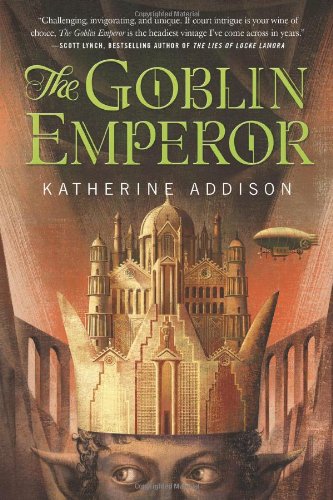
http://www.amazon.com/gp/product/076532699X/ref=as_li_qf_sp_asin_tl?ie=UTF8&camp=1789&creative=9325&creativeASIN=076532699X&linkCode=as2&tag=thejadcon-20Katherine Addison's The Goblin Emperor is a coming-of-age story set in an Elfland empire during a time of airships and mechanical clocks. The titular Emperor – an outcast youngest son – finds himself not only unprepared for a position none thought he would inherit, but beset on all sides by opposition fueled by class, race, sexism, ambition, misinformation, ignorance, greed, tradition, and every other force acting on the empire and those who shape its future. The story's scope slowly broadens from one boy's bewilderment to an enormous intrigue involving the Empire's relations with foreign nations, the internecine competition within the Empire, political disputes over infrastructure development, and a host of prejudices.

Why You Want To Read The Goblin Emperor

The Goblin Emperor depicts an empire entangled in a complex web of internal politics, personal pride, public corruption, conflicting philosophy, international tensions, technological innovations, family ties, social customs, class division, economic competition, educational divides, and imperial traditions. The author weaves ignorance, greed, and hatred into a rich tapestry; opponents can't simply be murdered off or dismissed because many of them are perfectly good people in need of a few true facts.  The protagonist must choose whether to surrender or fight every time he's confronted, and the reader learns who he is by the battles he picks.  Along the way, he teaches himself and those about him who he is.  (At least, those who bother to look.)

Told in close-third, The Goblin Emperor follows Maia's ascent – from an ignorant boy under the fist of an exiled drunken bully, to a minority-race Emperor surrounded by courtiers who would happily see him sink into a soft life as prisoner in an imperial residence.  By actively involving himself to ensure the competent investigation of last emperor's death in an airship wreck, Maia makes himself  the target of those whose last assassination brought him to the throne.  Maia isn't drawn into defending all his dead father's policies, but he's brought to discover just what a complex world he's joined.

The prejudices that drive so much of the conflict in The Goblin Emperor aren't trite character tags, but plausible-seeming convictions as variable as the characters are diverse. As characters learn more from each other, the reader learns which quickly abandon false ideas, and which cling to their views despite the facts like the small-souled bigots the author clearly intends them to be.  Maia distinguishes himself not because he's got a magic wand (he's useless at magic) or because he was born to fulfill some great prophesy (he was born to die in exile). He also doesn't distinguish himself as a warrior (he gets the worst of every physical confrontation).  His distinguishing characteristic is that he possesses and maintains his humanity.  The coming of age story culminates not with a coronation or a marriage but with a decision to do something big for the people he rules despite the headwinds he faces getting it off the ground: he makes good on something that matters to strangers.

Traditional Jaded Consumer Content Alert

The Jaded Consumer generally includes a note or two on aspects of a reviewed work for readers whose peculiar sensitivities may be upset by some otherwise innocuous aspect of a fictional work.  For example, some readers may be sensitive to the appearance of genuine belief in real-world religions, such as appears in Eliza Crewe's Cracked.  In Steven Brust's and Skyler White's The Incrementalists, the Jaded Consumer noted a reader would find politics.  Myke Cole's Shadow Ops series offers optimism about the human condition.  Naturally, none of these are fatal. A reader with the certain senstitivities may be, shall we say, mismatched to a book.  Content alerts are for these less-than-fully-omnivorous readers.  If you're made of tougher stuff, feel free to skip this part. The content alerts here are based on speed and politics.

Until the protagonist – Maia – becomes embroiled in the Empire's complexities, the reader sees nothing but his personal worries and fears.  The reader learns about the world no faster than the main character.  If you enjoy only action sequences, and lack patience to watch characters discover their world and themselves, this book is not for you.  This isn't a story about a conquering hero or a successful warlord.  The protagonist inherits his title when everyone ahead of him in succession unexpectedly dies.  The meat of the story is about what Maia does after inheriting – the choices he makes while dealing with people and exercising power.  This isn't to say Maia does nothing; his decisions have a enormous effect on the allies he makes and the success of his reign.  Without these decisions, he'd never keep his throne.  There's conflict, and there's decision, and there's change.  But if you require a heavy diet of fight scenes and chases, this is not the nail-biting thriller you were looking for.

Readers used to a breakneck pace may find this story's pace more stately than they are accustomed. The pace has definite causes.  Sentences are not whittled to their barest parts.  Facts are not bare; even pronouns are occasionally given long discussion. The non-English language of the Elves apparently has a formal first person (depicted as "we"; it's not the royal "we" because characters other than the Emperor employ it), a normal first person, and second-person pronouns that vary with familiarity.  Speakers of European languages may find this circumstance more familiar than English-only speakers, but the author spends time describing the effect of these pronouns' use in dialog between characters whose relationships are changing. This isn't surplussage or waste, but it's a level of detail that has an effect on the speed with which anything can be described: things can take a while. This doesn't mean they're boring to persons of normal sensitivity, but the fact may be of interest to readers who know they demand things move at top speed. 

Then, there's politics. [SPOILER] The Goblin Emperor drops lots of details on the reader to illustrate the brokenness of the empire Maia inherits.  Inequity in educational opportunity, gender rights, and all kinds of areas are all dropped on the reader as on the new emperor, and we sense the emperor intends working on all these things.  The protagonist articulates no promise or plan for them all, but the reader is given a clear idea that there's much work to be done in the empire, and plenty of evil to be had in unconcerned government.  The Goblin Emperor advocates social reform by condemning gender roles, bullies, and the apparatus of established power.  To the extent the reader wants Maia to succeed, it's because the political necessities suggested by the author resonate with the reader: we want the empire's victims saved from the laws and customs that drive artisans blind weaving fine silks, ruin women's educational opportunities over socially-assigned roles determined by gender, and oppress the working classes to the point the emperor is unable to fault a villain's conclusion that all the good accomplished by the protagonist has been made possible by an establishment-toppling multiple-murder just before the opening curtain of Chapter One.  [/SPOILER]  The Goblin Emperor is, therefore, political: it not only urges that genuine humans are needed in power (implying that the kinds of oppression depicted in the book prove their perpetrators are less than fully human), but it comments on the role of violence in these reforms in ways that could easily upset persons of tender sensitivities.

I certainly enjoyed The Goblin Emperor, but those readers with peculiar sensitivity to pace or politics should be aware how each work in this book.

Details. Glorious Details.

The author spends considerable time showing the reader details.  For example, the outrageous ostentation of the top tier of society in the Empire is depicted in recurring descriptions of dress and adornment and the conduct of servants.  The author's recurring discussion of personal pronouns signals a willingness to examine minute details in the interest of painting The Goblin Emperor in full color for the reader. Despite clear willingness to slow to provide detail to readers, The Goblin Emperor did surprise with non-detail in two places.  Near the beginning of the book, Maia looks from an airship at a "beautiful" view of the sun on the horizon.  Later, he looks on a "surprising" gift clock. The build-up to each event engendered an expectation of some description why the adjectives were warranted. What sort of beauty? What kind of surprise? Colors? Shapes? Movement?  These things weren't important to the story, but the detail painted for the hair accoutrements and carriage attendants and jewelry and so many other non-critical things led me to blink in surprise that these descriptions were omitted.  But these details don't affect the story, so what does it matter?  Katherine Addison showers readers with beautiful details that depict the alien worlds of the Elves and their Goblin neighbors.

Readers who want to get all the information encoded by the author in her writing may wish to note that the book has a useful appendix.  "Extracts from A Handbook for Travelers in the Elflands" – purportedly a Crooked Stair Press product printed for the Royal Merchants Guild of Porcharn – may be worth bookmarking by those who want to understand when the author uses a family name to describe the whole family and when the author intends using a family name to explain the gender and marital status of an individual.  The author divulges the system for decoding the endings affixed to family-name roots, and this may be of real help to people hoping to keep straight which of two related people are being described (which could be disambiguated by gender, for example).  I personally found myself hard-pressed to keep straight the large number of long and alien-looking Elf names, but at least decoding them into gender and marital status is a help.  In a paper edition, dog-ear the "Handbook" at the end.  It's not essential to enjoyment, but it's an aid one should know exists.

Conclusion

The Goblin Emperor is an exciting look at a near-orphan coming of age in a hostile environment with nothing about him but his (largely uneducated) wits.  It's an underdog story.  Sure, the "underdog" is Emperor, but he's surrounded and outnumbered and bewildered, and his only "ally" in Chapter One is the drunk who beats him.  We want poor Maia to succeed, and we're interested to see his humanity as he refuses to become the monster his accession to power invites.  We want him to succeed not only in the sense of overcoming enemies, but in the sense of overcoming the urge to descend to their level to do it.

The Goblin Emperor comments on family, government, privilege, discrimination, and all kinds of things – but it's about the triumph of humanity on the only scale humans can really feel: one on one.  Maia must teach individuals he's worth taking seriously as a human, and he must rescue others from misery, one at a time.  There's a nation to save – perhaps a whole world – and it's too big for one person to fix.  But Addison's emperor shows us the only success that matters: one individual's triumph against despair by doing better for others than one's been offered one's self.  The victory of The Goblin Emperor is survival without losing one's soul.  It's a journey that's wonderful to see in print, just as we long to see it in the waking world.

The Goblin Emperor is well worth reading, and I'll look forward to more from Katherine Addison in the future.

Thursday, January 2, 2014

Once More Into The Breach

Myke Cole's newest Shadow Ops novel Breach Zone is the first of his work I've read.  For this reason, the reveiw focuses on Breach Zone as a stand-alone novel rather than viewing it as the continuation of a series (which – review spoiler – the book was good enough to inspire me to read).

Overview
Drawing from personal experience with military and law enforcement, Cole paints a nightmare in which police objectives and military objectives become intertwined with personal liberty issues that provoke insurrection in a dark alternative universe in which individuals stand at risk of spontaneously manifesting potentially uncontrollable – and in some cases, outlawed – superpowers. Since people can't pick the powers they manifest, insurrection ensues.  In the Shadow Ops universe, insurrection can be supported not only by personal superpowers but mythological races and Apache gods bent on objectives less noble than liberty and justice for all.  While Myke Cole's newest work involves characters and events a new reader can tell have appeared in previous novels, readers have no trouble picking up not only key characters' motives and back-stories, but can easily find and follow the characters' nuanced and conflicted relationships with each other, their society, their government, and those with whom they work. Another set of divides that's interesting to see explored are the ones between military and law enforcement, between military and civilian command, and between supers who conform to the laws governing supers and those who can't or don't.  New readers can follow those just fine, too. The Shadow Ops world's a complex place full of ugly contradictions.  Myke Cole paints a portrait of the characters and their environments that make it easy to understand the motives behind every scowl and slight.  It's a thing of beauty.

Billed as a military fantasy, Breach Zone doesn't read like the worshipful documentary of a military venture. The book is sympathetic to the antagonists:  the believability and sympathy of adversaries' motives, for example, makes Scylla's personal tragedy much keener than if she'd been crafted of enchanted cardboard like certain other fantasy villains Who Must Not Be Named.  It's hard not to root for her redemption.  The train-wreck laid out for the reader is an exciting tale of inevitable and avoidable but utterly wasteful destruction – tragic but hopeful – and it's a great ride. 

Out of Order Reading
To read Shadow Ops: Breach Zone before the earlier Shadow Ops books is not only possible, but enjoyable. Some of the terms used in the Shadow Ops world – a Probe isn't a measuring tool – won't make sense for a while unless you start with the Appendix (which gives a little world overview), but even world-specific definitions eventually become clear without resort to the Appendix.

Shadow Ops isn't an episodic world in which books don't affect one another; events have a chronology and the outcomes of prior books clearly affect events in Breach Zone. The biggest risk in out-of-order reading isn't confusion but spoilers: characters' backstories are intertwined with the events of prior books, and the aftermath of earlier conflicts forms the basis for current attitudes and current problems. So, reading Shadow Ops first tells you how prior books' main conflicts shook out and who lived.

But if you can read Breach Zone and can't lay your hands on Myke Cole's other works yet, don't despair: you can enjoy it just fine.

Why You Want To Read Breach Zone
Military thrillers often stand on plot to hold readers, and play on your appreciation of military values to give you the feeling that the story succeeded. Sacrifice is powerful and emotional and writers can pull quite a bit out of it. It's expected to see use of the theme in a genre where it's a major feature of the cultural landscape.

But it's not every writer of military stories that shows character development. Sure, you often see a character moving from fear to aggression, or doubt to confidence, but how often in a military story do we see characters transforming in meaningful ways that show their values and beliefs?  The death and darkness overshadowing the bulk of Breach Zone is redeemed in the many transformations that suggest to the reader that everybody – even minor characters who die horrible senseless deaths – is capable of change.  There's plenty of tragedy – people's decisions, seemingly inevitable results of their character and values, lead them to their doom on all sides of the conflict.  The joy in the book doesn't come only from one-liners, though it's got that;  for example, when the male lead demonstrates he can accept correction and obey instructions, his romantic interest tells him the fact improves their outlook. But Myke Cole goes beyond one-liners and high-stakes plot problems to say something about humanity: by showing so many characters changing, he shows us the uplifting possibility that people really can change for the better.

Then, there's the non-simplicity of the story.  Myke Cole depicts plausible-feeling people reacting to their immediate circumstances in sympathetic, plausible ways, without making anyone into a cackling caricature of crazy.  The sympathetic portrayal of nearly every perspective in the book necessarily highlights the complexity of the problems each wants solved – and the deepness of problems that won't easily be solved.

There's not just plot, and characterization, but character development. It's not just an exciting series of conflicts; it feels good to read. 

Happy Days (Content Warning)
It's a tradition at The Jaded Consumer to deliver gentle warnings to people who might not be part of the target audience for a book reviewed here. Inspired by readers who turned on Jim Butcher over religion for having the temerity to discuss the work of angels and demons with the same seriousness with which he wrote about the politics among the Queens of Faerie (and, I ask you:  where else will you find top queens but in a place called Faerie?), the first such warning was given for Eliza Crewe's debut novel Cracked, to alert readers identifying themselves as unwilling to tolerate depiction of religion in urban fantasy (Crewe's characters included earnest Templars in a modern crusade). The review for Steven Brust's and Skyler White's collaborative work The Incrementalists, by contrast, alerts readers who might risk apoplexy encountering real-world politics in their fantasy. None of these warnings is intended to slight the works; they're good books, and great reads. People who would avoid Jim Butcher's Dresden Files books over the appearance of angels or holy swords are missing out on all the fun that's erupted since praise was heaped on Butcher here over five years ago. But those who won't like religious content should know it's there, and go buy his Codex Alera instead.

That having been said, the consumer alert for Breach Zone is extremely tame. It's this: the book is optimistic.  And not in a little way.  In a deep way: Myke Cole depicts positive change in individuals as possible.  If you want a book in which the bad guys are just bad, and in which bad guys are ultimately crushed under the heel of the righteous simply because the righteous are smarter and faster and stronger and have better equipment – and you don't want to ask yourself hard questions about what the world would look like if the bad guys were as smart and as well trained and funded and equipped – go read a Tom Clancy novel.  Think about the villain who betrayed loyal troops to be massacred by drug lords in Clancy's Clear and Present Danger: he moves from a self-interested corrupt intelligence bureaucrat willing to throw fellow countrymen under the bus for a few bucks, to a self-interested corrupt intelligence bureaucrat who is willing to throw himself under a bus to avoid the public humiliation and drawn-out proceedings involved in his inevitable prosecution.  It's not a transformation, its the author celebrating a protagonist applying cruelty as justice to bully a caught-in-the-act bastard into suicide – with impunity, with the author's approval, and while the author expects readers to celebrate it with him. It's not transformation, it's public shaming.  There's no optimism on either side of such a resolution, only schadenfreude.  (Clancy's books still have rocking aspects; who else depicts with such detailed glee the complexity of modern military operations, and the relationship between intelligence assets and operators' execution of resulting plans?  Who else shows the great chess game of modern military decision-making?  Clancy's work has great merit, just not on the basis of its depiction of character transformation.)  Contrast Cole's Breach Zone, in which a key character's emotional relationship to society's different classes changes. The character's very concept of society's classes changes.  This is real transformation.  And Cole sells it: when it hits, it's easy to believe.  To believe that's possible requires a deeply optimistic outlook on humanity.

And (spoiler) this has a consequence: cooperation.  When you think of problems in which you notice government involvement and military action in the news, it's hard not to suppose that the cooperation that wins the day in Breach Zone isn't a better answer than some of the knee-jerk first responses that appear in the news.  So, maybe Breach Zone has some political content. But the real consumer warning is this: if you require a military thriller to have darkness, death, and destruction as its overhanging message, or if you require the big story in a military thriller to be the destruction of "enemies" because the "good guys" are just better, or if you can't swallow the idea there's a way to solve problems rather than just shoot enemies faster – this book may not be for you.  This book is best read by those willing to consider that humans can change for the better.  If you can't buy that, you might find it irritating.

So, there.

Conclusion
Myke Cole's Breach Zone is so complete on its own that knowledge of prior work isn't essential to understanding and enjoying it. But it's an outstanding advertisement for his earlier works to those who haven't read them.  It's clear that the reader's relationship with characters from earlier books, if fleshed out in through experience with them, could make the climax of the story more deeply resonant with readers. But it's perfectly capable of standing on its own.

And it's a delight.

Breach Zone presents a rare respect for every kind of character that exists in the story: civilian and government; military and law enforcement; super and normal; outlaw and posse.  The fact all the adversary veiwpoints are so believable – and their positions presented so sympathetically – makes the conflict and its resolution so much more enjoyable than plain-vanilla black-and-white tales involving constructed characters of pure evil and their necessarily-attracted protagonist opponents. Sure, Myke Cole also must construct his characters – but they don't have that stamped-from-the-mold feel one sees in characters made with less care. Cole's central characters have a "real" feel that's a pleasure to see and read.

Best of all, there are already two more to read.

Saturday, December 14, 2013

The Almost Girl Reviewed

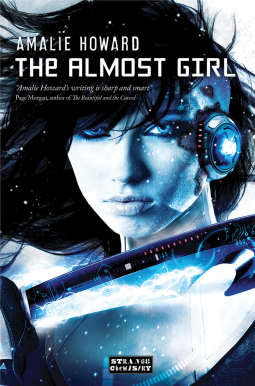
From Chapter One, Amelie Howard's young-adult novel The Almost Girl effectively employs elements from the reader's own youth to give a familiar feel to an unusual teen's underslept, overscheduled life in a new school surrounded by people she neither knows nor understands in a world that has much bigger problems than the semester project she learns is half her physics grade. The disconnected teen we've known if not been becomes the building block for the reader's view into a coldhearted killer from another universe, sent here to blend with teens while evading military-designed fast-zombies – no, no, she says there are no zombies … but the commandos she used to lead before being given her secret mission are against her now and she must change gears rapidly from ninja warrior to vapid schoolchild as she tries not to lose her prize to other hunters.

Why To Read The Almost Girl

The strength of The Almost Girl is its use of what we already know to evoke our feelings. Who hasn't known tattling teacher's pets, naïve goodhearted victims, thuggish jocks, scowling and territorial popularity queens, and teens who notice with great force when an empty room has only a boy and a girl in it? The protagonist's alienness makes all the more credible her alone-ness, her separation from the rest of the world, the weight of what she's doing alone – things we've already sensed from the elements painted with the familiar experiences found in teen life. The fact the protagonist's stakes involve an inter-dimensional war and the life of a dying prince and so forth merely amplify and explain the anxieties and fears Howard paints with our own experience. Who hasn't seen – or been – a student called on the carpet before a teacher? Who hasn't been busted by a parent, smooching in a house thought to be empty? Come on, you at least came close. You've been there. You'll feel it, too.

You'll also feel the personal betrayal and guilt and pride and anger in the various relationships Howard provides with siblings, acquaintances, your best friend, incomprehensible parental figures, and seemingly everything else you did and knew as a teen.  Howard leverages this to great effect, so we feel the peculiar fear of being identified, caught, and punished each time we're led into another episode that echoes in our own lives.  Howard depicts relationships and interpersonal tensions with great mastery.  The author gently pulls the curtain on certain scenes before they go too far for a YA audience, or else fuzzes the camera so we don't get detail you couldn't notice through frosted glass, but this does nothing to impair our view of the conflicts that drive the story.

Howard appears to understand completely that what makes a story work is the characters, their conflicts, and keeping the reader in sympathy with the plight of the protagonist. And make no mistake: this book is about the characters and their insecurities and triumphs in the face of shifting circumstances and relationships and allegiances. If the story closed on an unambiguous Happily Ever After, there might not be a sequel. But the narrator is ambitious and driven so, in a tragic tradition dating back thousands of years, risks the rewards she's fought to win in a bid to fulfill her sense of mission despite the apparently easy alternative of happy retirement.

To watch broken people try to make their way in the world, not knowing whom they can trust, is much more intriguing than many of the fairy-tale worlds assembled for book buyers. And it's exciting to read a yarn about people operating with limited information under pressure. It's easy to sympathize with the main characters. It's particularly delightful to find one's self liking so many of the characters who are in conflict with one another. The Almost Girl is a fun read, and the perspectives from which it draws are surely as accessible to those who are still struggling through their teen years as to those of us who see them only in a rear-view mirror.

Content Warning

It's a tradition at The Jaded Consumer to provide a content warning to readers who might be set off by contact with some pet peeve that might not be revealed in a cursory overview or a read of the back-cover copy.  Content warnings don't imply a book isn't a good read – but what book is for all people?  Eliza Crewe's Cracked was extremely hard to put down, though its review included a warning for people who want their urban fantasy without central, overt religious content of the sort that began bothering a small set of Jim Butcher's readers some years back once The Dresden Files got underway.  The review of Steven Brust's and Skyler White's The Incrementalists notes that readers unwilling to tolerate real-world political commentary in their fantasy might want to look into the authors' politics before delving in.  They're wonderful books, but like Neil Gaman's shirt says,  
de gustibus non est disputandum. (There's no accounting for taste; literally, "there's no argument about the hors d'oeuvres." The brain cross-section shirt really gives new life to the old quote.)  As with the review of The Incrementalists, effort is spent to prevent this section from consuming undue space.

The Almost Girl is a book is about people and their relationships and their conflicts.  It is not a book about technology or security.  If you are a hard-core sci-fi fan who expects to experience shakes if high-tech super-suits from another Universe turn out to use halogen lamps for external illumination, or you think you will be unable to read further if that civilization manufactures thermometers that show temperature measurement that make senses to those of us who grew up using the Fahrenheit scale, you may want to think carefully before upsetting yourself. If you're a military reader with unshakable convictions regarding sentry removal techniques or security procedures, you may need to take a chill pill before getting too far into The Almost Girl. The cover evokes a delightful cyberpunk vibe, and it may attract scifi readers with demanding expectations regarding the made-up gadgets and technologies that inevitably color such work, and it is to some of these folks to whom the warning is largely directed.

Unless your OCD is out of control, or you have a special peeve involving the above, you should enjoy the book juuuust fine.

Conclusion

The Almost Girl uses an impending inter-dimensional war – and the need to keep ahead of a dimension-shifting cadre of conscienceless fast-zombies in supersuits (but no, says the narrator, there's no such thing as zombies) – to raise the stakes on a plausible-feeling teen suffering otherwise ordinary-looking stresses involving boy/girl interactions and siblings and parents and classes and teachers.  There's lots of action, to be sure. But the best gem in The Almost Girl is the work we all have in life, to find a place for ourselves however crazy it gets.  Amelie Howard's world is just painted a little crazier than yours.  It's worth a visit.

Monday, September 30, 2013

Review: The Incrementalists

The Incrementalists Steven Brust Skyler White cover revealThe Concept

You've seen the one about the big, long-enduring, highly organized secret society committed to maintaining a secret lock on the world's key resources.  And you've seen the one about the secret organization that just got ready to launch its long-prepared bid for dominance of the world.  But Steven Brust and Skyler White don't recycle either in The Incrementalists.  The Incrementalists comprise a scrappy little (dis)organization whose uncoordinated efforts focus on tiny actions to make the world a little better.

Isn't that a change from the secret plotting you're used to being led to believe is behind ancient secret organizations that wield weird powers over the mortal realm?

It's about time.

The Plot
Once you've been introduced to a leaderless band of potentially long-lived personalities, you have to start wondering what happens when they disagree with or misunderstand one another.  And guess what?  The confusion generated by their misunderstandings and disagreements immediately reveals mysteries the reader wants to see solved.  Who killed Celeste?  Who's after Ren?  Why?  The Incrementalists presents a mystery, and an adventure:  come join a secret society that's being torn up over your joining it.  Some of whom blame you.

Whee!

The Pace
The pace isn't a Dan Brown thriller's:  The Incrementalists' conflict is largely mental.  Who's the victim, who's fooling whom, who really loves whom, who's the villain hiding from whom and where … and behind everything: why?  There aren't so much car chases and shootouts as arguments and poisonings.  In comparison to other Brust books, this is paced much more like Dzur than, say, Jhereg. The Incrementalists' pace feels suited to a story about people who are trying to remain secret, and show real antipathy for unnecessarily being made to expend effort to keep hidden, when there's something interesting that'd be more fun to do instead.

Pretty soon, the reader is treated to debates about the merits of attempted revolution, and whether shadowy organizations should Save The Known World (for some definition of "Save", if you can sort out just what that means – the characters are refreshingly willing to disagree what that means). The tale teeters as if it might careen into a big story about a battle for control over the future of humanity.  But panic within the Incrementalists' own order derails debate.  The bulk of The Incrementalists is about individuals and their fears, not some scheme to save the world. 

Sure, the characters have ideas how best to save the world.  There ideas fuel suspicions, but not the immediate conflict.  It's about the Incrementalists themselves, and how they conflict with one another.  And the fun in that is exactly that it's new:  we've seen secret societies used to fuel battles for control of the world before, and we will see them again – this is a chance to enjoy a story about people who are fighting to survive the secret society from the inside.

The Plausibility
Look here.  I've already compared this to Dzur and then Jhereg, and you want to hear about plausibility?  Please.  It's a fantasy.  People with super-normal powers, plotting.  Entertainingly, they seem to want to plot for humanity.  But the fact that the world in it contains cities with names we know and technologies with which we're familiar doesn't mean it's really the world we know.

Of course, there is the wonderful fourth-wall-breaking self-referential fun at the end – maybe they want to meddle in our world as much as their own.  It's fun.

And on that point …

The Politics
One probably shouldn't need a content warning in fantasy.  And The Incrementalists isn't about politics.  But I will make what I hope is a short note for those who aren't predisposed to enjoy a story with this politics in the scenery.  In my review of Cracked, I included a similar warning to those readers who turned on Jim Butcher when religion appeared in his Dresden Files, and said that Cracked's religious content ratcheted up much more quickly: readers too thin-skinned about religion to tolerate its presence (even in the context of a story that treats with equal seriousness the politics among faeries and the purpose of the Winter Queen) should be aware before reading that characters are motivated by and believe in some real-world religious tenets.  A similar situation exists in The Incrementalists, but with politics.

So here it is.  The Incrementalists is full of characters who are interested in making the world better.  A few of these characters espouse … (surprise!) … political convictions.  And the authors don't make the heavens fall on them as a result.

Now, the plot doesn't turn on politics or their correctness (though if it had turned into a world-domination thriller it certainly could have), so a reader needn't adopt a single political view in the book to enjoy the characters' mystery or its investigation or the ensuing conflicts and their resolution.  You should be just fine.  But if you're particularly sensitive … well, be warned the characters have political views, and assign good and bad values to historic events that involve politics.  And it shows up in more subtle ways: a main character is shown using PowerPoint for work, but Google products in her off-hours.  She's described as once accusing a boss of making Gates look like Stallman.  Details of this sort are part of how the character is sketched.  You don't need to put the GNU license on your own code to enjoy the book, though.  So, like … chill.

If you want to read a Brust fantasy in which the politics of the people out to save the world don't remind you of the things that bother you about the politics in the world you know, consider his hilarious and fun homage to Alexander Dumas, The Phoenix Guards.  Or – set in the same world – most of the books about Vlad Taltos (Brust's character Khaavren, appearing in both, shows up in this site's sidebar among my favorite characters).

The Point
The Incrementalists involves a new superpower, with new types of things to go wrong.  And its structure isn't a retread of some well-established world-domination plot.  In fact, the main characters' biggest disagreement in life seems to be how best to save humanity.  The conflict between good people about how to do good is a change from the war against Voldemort and his hoards of power-hungry thugs.

It'd spoil the story to describe in much detail what the story is about.  But it's no danger to expose that it follows people who struggle with whom to trust, whom to love, whom to protect, whom to attack … and whether to act at all.  Maybe it's new in defining a new set of rules for the superpower that makes the Incrementalists work as an organization, but let's face it:  in dealing with human failings and human struggles, it's very old indeed.  The authors' decisions whom to make antagonists and how to motivate them say some important things about what they think the real problems in the world are – problems much more basic than – and beyond – politics.  The authors avoid intercontinental battles for world domination to comment on what's worth fighting for – and worth living for.

It's not by chance that one of Brust's characters sits on the right of every page of this site on a list of all-time favorite characters.  Are there more exciting page-turners?  Sure.  But a good character is worth her weight in gold.  How much of The Incrementalists do you spend fearing for Ren?  And why?  How much of the book do you spend hoping one of the do-gooders will figure out what the only obviously good thing to do is?  What (beyond the fact they aren't reading her first-person narrative) keeps them from seeing what they should be doing about her situation?  These questions are much more important to the story than whether some world power will be nudged into nuclear disarmament.

The Incrementalists says something about personal values, priorities, or character.  Maybe it'll assure you what you treasure most in your life is treasured even by immortal superheroes, and you have it made already.  Maybe it'll remind you of your own struggle to conquer the only part of the known universe that matters.  The point of The Incrementalists isn't to explain how to save the world, but how a few people fought to save themselves – and, maybe how everyone can.

It's a murder mystery with no corpse and an adventure without leaving town and it's a lot of fun.  It's absolutely worth reading. I hope you enjoy it as much as I did.

Tuesday, September 17, 2013

How I Spent A Night Addicted To Crewe's Cracked

This is The Jaded Consumer, and I'm a book addict.  Heh.

I've written a review of Eliza Crewe's Cracked.  My review was longer than the "I loved it" at The Book Smugglers, but mine's not up yet. The ARC on which mine was based contained a warning about the possibility that changes might appear in the final version, and to check with the publisher before reporting on certain things.  So, it waits while I wait for a response on some questions to the publisher about whether certain elements were altered in the final version.

But I can share that I couldn't easily put it down.  Sure, I managed to do so long enough to feign normalcy in connection with some social obligations, but it didn't take.  Unwillingness to stop reading at 1:38 PM gets you a different look than does unwillingness to stop reading at 1:38 AM, which is when I noticed the time.  Not that I was done yet.

Cracked didn't brook interruption well.  I have a longer review coming, but the short answer is that it was a lot of fun.  The Book Smugglers has a few days left on a Cracked book giveaway, so if you like urban fantasy you know where to go.

Tuesday, September 3, 2013

Scalzi's Redshirts Takes 2013 Hugo, And No Surprise

Although you might have missed it if depending on Siri ...


... WorldCon 2013 ended yesterday.  (The above text reflects the results of asking for first WorldCon Twenty-Thirteen then asking for WorldCon Two Thousand Thirteen. And no, I've never heard anybody refer to a time of day with thousands.)

Hosted by Lone Star Con 3 in Austin, Texas, the 71st Annual World Science Fiction Convention was (as each is) also the place to be to see the Hugo Awards announced.  This year, those of us who'd read John Scalzi's Redshirts: A Novel with Three Codas were completely unsurprised to learn it was voted Best Novel.  On the one hand, it enjoys much that went right in Galaxy Quest's awesome sendup of Star Trek – the main characters are surprised to find they're living the fiction that's been off the air for years, and it's not a happy surprise to discover they face real risks – but on the other it mixes the horror of being a bit character in a story about somebody else, the writers of which are fond of killing extras for dramatic impact while exploring the characters' desperate efforts to keep their sanity, and safety, in a world gone mad.  And it asks some interesting questions:  who are the bit characters in life?  Who's this story really about?  Geeks with a thing for fiction will enjoy the three endings, each told not only from a different point of view but from a different person.  It's a fun Trek spoof and a serious story and an intellectual riddle and it's the winner of the 2013 Hugo Award.  Those of you who haven't had a chance to enjoy this one can get Redshirts' first four chapters from Amazon free, right here.

As for the rest of the 2013 Hugo winners ... I now have my autumn reading list.

Thursday, August 22, 2013

Jim Butcher Update from Space City 2013

I've reviewed several of Jim Butcher's books with what may be all the apparent objectivity of a fawning fanboy (but really, they're great).  But this blog is about what's offered to consumers, and he consistently offers a solid product.  Of course the good news gets reported with the bad.

The current news? At Space City 2013, Jim Butcher confirmed that his September draft deadline for Skin Game will be met with a September-ish submission, making for a year-end or early 2014 publication date.  Also year-end?  The short-story from the point of view of Harry Dresden's apprentice Molly, excerpted here, will finally appear in print December 3, 2013 as part of the George R.R. Martin-edited anthology Dangerous Women.

Thursday, May 2, 2013

Butcher Announces Next Dresden Files Title

At Jim Butcher's web site, the title of his next book in the Dresden Files.  There's a reason this series' main character is in the sidebar on the right, and if you look at some of the reviews I've written here about buy the first of his books you'll get an idea why.

The next title is Skin Game.  At the time of this posting, there's no content there other than the title announcement. When Ghost Story ended, we knew what was happening next and it was easy to interpret the next-announced title Cold Days.  (The first time I read the title announcement on that one, I was sure it was Cold Day, which I liked even better. I wonder whether I was mistaken, or why it changed. Alas.) But the end of Cold Days left enough to happen next that it wasn't evident where it'd pick up, making the interpretation of the title more of an adventure.

But I'm keeping my theories to myself.  I wouldn't want to spoil anything for an unsuspecting reader. But you can always email to share theories about Dresden :-)

I especially won't spoil things in previous books, like what Butcher must be teasing regarding the name of the oldest queens of Summer and Winter. Muhuhahaha! And so we wait for the publication of the next Dresden book – let the suffering begin!

Tuesday, February 5, 2013

Butcher's Cold Days Rocks the Faeries' Casbah

I've previously commented on Jim Butcher's Dresden Files series on this blog. "Commented" may be a bit mild: the first post on Jim Butcher's work, Praise for Jim Butcher, has been read numerous times and continues to turn up week after week among the posts people still find in search engines and read. But since I have begun a different blog that relates to fiction, I have become somewhat torn whether to move Butcher blog entries to the new site, which deals much more closely with fiction.

This blog is dedicated to consumers. People who buy fiction are consumers. I think it's fair to evaluate Jim Butcher's latest work (and his whole series) as a consumer product – right here. Those of you who like are free to pretend they didn't see the title of this post, and pretend this is a hard-hitting critical evaluation of Jim Butcher's work. It is, of course. I simply conclude that the work is worth every penny, which is why I gave the latest book to my sister when the weather turned cold last year then harassed her as she continued to fail to install it on her Kindle and read it.

So, the review is here, under a pseudonym. Later when I want to suck up to Butcher in connection with my own work, this may be trouble. But here it is.

Past Is Prologue
Before writing Cold Days, Jim Butcher wrote quite a bit of other fiction in the same universe. While it's not strictly necessary to enjoy Cold Days – he explains enough along the way that it's completely edible as a stand-alone dish – these works do so much to build the universe in which Cold Days is set that one should really consider them. Since some of them are free, this is also an opportunity to test-drive the author. Works in the Harry Dresden Files include:
There are some more short stories, but I haven't seen them all yet. They include one from the perspective of his apprentice Molly, and several about work done for his client Bigfoot. Expect good things. But not for long: Butcher reported stopping short stories to focus on his novels.
Jim Butcher's secret – well, it's not a secret, but it's the sauce that makes the meal – is that the author knows where he's going. Unlike authors whose middle books sag, or who get lost in the weeds with characters (or, as in Dallas, turn prior work into dream sequences to fix mistakes), Jim Butcher's books and their characters all row in synch, moving the boat steadily and inexorably toward his goal. (That doesn't mean they're not in conflict within the books, but it means this activity is all consistent with the big picture, and advances the series as it advances each work.) Just as each book as a beginning, middle, and end – each of which feel like purpose-built performance parts fueled with nitro – so too does the series. Changes/Ghost Story served as the turning point of the series, and I expect the rest of it to feel very much like Cold Days: a wild toboggan ride, buffeted by the chill blast of Butcher's coldly-calculated and masterfully measured plot. The final three books, which are not expected to follow immediately but after some undetermined number of intermediate volumes, have unannounced release dates:
  • Hell's Bells
  • Stars and Stones
  • Empty Night
Based on comments elsewhere, these shouldn't appear until after about twenty of the novels are out. This doesn't mean you can't read now, though. They are quite unlike Connie Willis' delightful and deservedly-award-winning work in her "books" Blackout and All Clear. In describing these, I put the word books in quotes purely out of disdain for the plural: they constitute really but a single story, but it was brutally cut into two physical volumes. You can't pick up Blackout without All Clear at hand, or you will finish dissatisfied and furious. (I had both ready, and so was delighted by them. Don't risk a different path with these two volumes.) By contrast, each volume of Butcher's series really has a self-standing story worth reading in its own right. A person could read them out of order and enjoy them, though I suggest avoiding spoilers by getting them in order.
About Cold Days Itself
When the narrator wakes a few months after the curtain of Ghost Story, he discovers he really can't escape the choices he made in the last few books. And it isn't long until he's given instructions that make him absolutely certain he needs to get it right the first time when he decides whether he's going go obey them or not. Cold Days shows Harry Dresden trying to do his thing without depending on the people whose support he used to have before he joined the Winter Queen as her indentured-servant contract-killer.*

Naturally, this doesn't work. At all.  On my read, Harry lasts maybe ten minutes. Less, even. Butch as Butcher's protagonist is, he's still outclassed in the unending supernatural deathmatch tournament that is Chicago in the Dresdenverse.

Harry Dresden just can't go it alone against the kinds of forces against which he's pitted himself. Not with any chance at all of survival. This has been true since before the cataclysmic events of Changes, though Harry tries awfully hard not to imperil his allies as he did Michael by the end of that book. Dresden arguably got close in Turn Coat, but he ultimately involved his apprentice Molly and his faithful companion Mouse, and even hired a P.I. to take pictures of his hiding opponent. In Small Favor Harry inadvertently imperiled Ivy with her involvement, enabling awful consequences for Ivy and threatening every living thing on the planet with the risk of serious bad guys acquiring unthinkable power. In White Night Dresden risked his brother and all his mortal allies in an all-out assault on his opponents, while taking a chance on elevating the supernatural stature of Chicago's coldest and most calculating crime boss. In fact, Dresden's decisions have led him to depend on his allies (to their detriment) going back through all the books. The consequences echo even in the current work: the career path of his love interest Karrin, which Dresden inadvertently derailed when she came to his aid in Proven Guilty, is completely over. And his apprentice is on a hit-list. And to aid Harry's plans, his brother's love keeps a dangerous job in the midst of mind-bending immortals (at least, they don't seem ever to age).

So we find in Cold Days that the more things change, the more they stay the same.  This doesn't mean there's no excitement: it means that Dresden's efforts to go it alone are such abysmal failures that he's dragged back to his old practices. Though sadder but wiser, he's still scrapping with bad guys and getting delayed and dazed while looking for answers to immediate dangers while time ticks quickly on catastrophe. His new powers are cool (so very cool – but of course they would be; he's joined the Winter Court) but they're far too new to be under anything like Harry's full control, and they're woefully inadequate to address problems that require skill and will one can't get as a gift from faeries.

And as usual, Harry has a lot more will than skill. It's his problem in this book to come to grips with the forces trying to make him into something he loathes, all while he's unable to avoid the people he loves and whom he hoped to avoid injuring by leaving out of his future fights.

Conclusion
In my last review of Ghost Story, I wrote:
Ghost Story doesn't raise the stakes or excitement from Changes, but if you find a book that does you are commanded to post its title in the comments because I need to read it.  I'm betting it's a rough hunt for books with such bang.
In keeping with my own command, I am posting a link to Cold Days. (Note: I also explain in that review that without Ghost Story, the full stakes of Changes aren't really available to the reader; the two are too intimately connected, and so much better together.) Without descending into spoilers, Cold Days manages to raise the stakes on Dresden and his loved ones and the world while advancing the series plot along a critical plot arc first disclosed to readers in Storm Front over a dozen years ago. A character arc opened in Summer Knight is closed. Along the way we learn more about lots of characters who have long colored the landscape of the Dresdenverse, which is a sure pleasure for longtime fans. For those who aren't longtime fans, the book is a rocking ride full of betrayal, uncertainty, and a race – on several levels – against the world's death-clock.

And what an ending. So many people's lives turned upside down, so many people's relationships upended – so much to sort out in the next book. And – some hope for Dresden's deceased love life. Lots to build on for the next major mishap.

Like I wrote before, my main complaint with Jim Butcher is that he produces only one of these in a year or more. I acknowledge it's an unfair complaint – I haven't completed a single novel of this caliber, and I don't know anyone who has fourteen works so satisfying in a single series, or maybe even to their names – but honestly it's about the only complaint I can level straight-faced against this body of work.

If you like Urban Fantasy, you have to read it. Or fantasy. Or whodunit stories. In fact, if you like any stories at all, I'd be hard-pressed to do anything but suggest giving it a try. The uncertain can test out the free chapters or the full length (and free) Restoration of Faith, which Ghost Story entertainingly references.


======

*: Or something like that. At the curtain open, Dresden is still working out what his new job is and what it requires of him, but he knows what the last Winter Knight did and is sure it's an awful job more suited to monsters than to men. Which is why he worked so awfully hard to avoid taking it – the full extent of which we learn in greater detail in Ghost Story.

===

For a look at how the last Summer Knight died and how Harry was previously introduced to his current job, you can enjoy Summer Knight. It's a delight.