Gloria Killian was freed after years behind bars for a robbery-murder plot in which she was utterly innocent. Unfortunately, this isn't a story about justice being served. It's a story about yet another prosecutor intentionally concealing evidence to dupe a jury into conviction.
In Killian's case, the conceal evidence showed the state's star witness traded leniency in his own case for testimony spreading blame to Killian. The hired witness agreed, and happily claimed under oath (to save his own skin) that Killian – whom he'd never actually met – masterminded the whole thing. Sigh. Normally, when a witness is paid for testimony – in money, or in freedom – the jury gets to consider how the fact and extent of payment impacts the jury's decision what it will believe. By hiding the fact the "star witness" was a paid rat, the State bolstered his credibility and prevented the jury from understanding his real motive to testify. Under our system, when a witness informs the prosecutor "I even lied my ass off on the stand for you people", the wrongly convicted don't automatically go free. Instead, the reports I've seen suggest the letter ends up in a drawer.
In the U.K., I understand the government doesn't have barristers on salary. The government's solicitors engage barristers to try cases from a pool of available barristers who try criminal matters, and the barristers who work on a particular case may have worked for the defense the prior week and may work for the government the next month. They have no career need to get convictions, and their perspective on their cases has the breadth of seeing both sides. Their objective isn't to advance the office of the prosecutor. Ideally, the United States would not have prosecutors bent on getting convictions of innocents in order to improve their scorecards, but our system is broken. The convict-at-all-costs culture of many prosecutors' offices has been noted before.
The American Bar Association's rules applicable to prosecutors – widely adopted by state bar organizations – explicitly state in Standard 3-1.2(c) that "The duty of the prosecutor is to seek justice, not merely to convict." But have you ever heard of anyone being promoted in a district attorney's office for seeking justice? It's the conviction rate you see measured. And you get what you pay for. So if you measure nothing but convictions, what do you expect?
Let's stop paying for empty convictions, and start motivating people to get the right people behind bars. Or – and here's an idea – keeping people from ending up offenders.
Saturday, March 15, 2014


Monday, March 3, 2014
Bitcoin Bank Robbery
The old is new again. In the Wild West of the online world, perhaps Bitcoin exchanges should be insured as banks: Mt. Gox just declared bankruptcy following an electronic heist.
The ease of moving electronic currency works against, as well as for, users. The alternative to anonymous cryptographic e-currency is authenticated cryptographic currency exchange, in which every transaction is logged and signed and verified – and subject to oversight and reversal, as with a credit card back-charge. Even that wouldn't end Bitcoin theft. Attacks would just shift toward subversion of the transaction oversight process, or elimination of complaining parties. And what price would we pay for this 'security'? Every bit spent or gifted could be scrutinized by whomever obtained access to the records. Instead of freedom, we'd find ourselves vulnerable to analysis by whomever accessed records to learn whom you spent money to protect, whom you depended on for security, whom you feared losing or what you treasured. Maybe ransom and blackmail would skyrocket even as injury-free Bitcoin filching plummeted.
Perhaps our best bet is to take banks seriously, and their insurance – but also our freedom to do things in private without oversight of strangers with no business in the things that make our lives worth living.
The ease of moving electronic currency works against, as well as for, users. The alternative to anonymous cryptographic e-currency is authenticated cryptographic currency exchange, in which every transaction is logged and signed and verified – and subject to oversight and reversal, as with a credit card back-charge. Even that wouldn't end Bitcoin theft. Attacks would just shift toward subversion of the transaction oversight process, or elimination of complaining parties. And what price would we pay for this 'security'? Every bit spent or gifted could be scrutinized by whomever obtained access to the records. Instead of freedom, we'd find ourselves vulnerable to analysis by whomever accessed records to learn whom you spent money to protect, whom you depended on for security, whom you feared losing or what you treasured. Maybe ransom and blackmail would skyrocket even as injury-free Bitcoin filching plummeted.
Perhaps our best bet is to take banks seriously, and their insurance – but also our freedom to do things in private without oversight of strangers with no business in the things that make our lives worth living.
Tuesday, February 18, 2014
Cold War Collapse Didn't Drive Totalitarian Police States Mythical
Anyone convinced the Cold War's meltdown created global freedom should pay attention. Not only is Russia a thugocracy run by veterans of the KGB, and Iran an Islamofascist state, but North Korea – ironically calling itself The "People's Republic" of North Korea – remains a fully-functioning totalitarian police state complete with trial-less incarceration, summary execution, etc.
Not that evil is isolated to formally-recognized enemy states. Current governments of friendly nations, and their elected officials, continue to defend civil rights violations, wink while a multibillion-dollar industry of slavery thrives in the "free" world (including the U.S.), and otherwise make a mockery out of the rule of law.
There's some evidence that economic pressure still works, but it's not easy finding the right place to apply it to every problem. The big trick is figuring out how to arrange economic incentives in favor of, rather than against, the rule of law and meaningful (that is, enforced) rights.
Not that evil is isolated to formally-recognized enemy states. Current governments of friendly nations, and their elected officials, continue to defend civil rights violations, wink while a multibillion-dollar industry of slavery thrives in the "free" world (including the U.S.), and otherwise make a mockery out of the rule of law.
There's some evidence that economic pressure still works, but it's not easy finding the right place to apply it to every problem. The big trick is figuring out how to arrange economic incentives in favor of, rather than against, the rule of law and meaningful (that is, enforced) rights.
Monday, February 17, 2014
Judged Olympic Events Strike Again
During the Beijing games the Jaded Consumer wrote a piece about judged Olympic events, and nothing has changed. Usually performers know when they're on and when they're off, looking nervously at the scoreboards when they're aware of an issue that could affect their judged scores. You've seen it yourself if you've watched. So this picture at CNN is worth a thousand words on the difference between performance and score at the "Most corrupt Olympics ever".
The problem isn't just in Sochi: the Indians who entered during the opening ceremony did it as unaligned independents under the Olympic flag, because India was still under sanction for corruption among its officials. This doesn't mean there's less corruption elsewhere, just that they're not electing folks who've been caught at it to represent countries as officials.
The problem isn't just in Sochi: the Indians who entered during the opening ceremony did it as unaligned independents under the Olympic flag, because India was still under sanction for corruption among its officials. This doesn't mean there's less corruption elsewhere, just that they're not electing folks who've been caught at it to represent countries as officials.
Snowden: Because Our National Intelligence Director Lied under Oath About It
For those of you interested in the traitor/hero debate on Snowden, the DC Clothesline has an article and interview that's been curiously absent from mainstream channels.
If the rule of law isn't respected by government even when citizens' lives are involved,
it's no surprise that it's ignored utterly when the issue is personal freedom and autonomy. The right to be informed about government is a fundamental assumption of democratic process: if you don't know what your government is really doing, how will you know whether you must vote differently? In that regard, Snowden is plainly doing something good for democracy irrespective of whether his conduct would be prosecuted by our current administration.
And why shouldn't the current administration use judicial process to miscarry justice? It's already lied to its own judicial overseer. Why would it stop there?
To do what Snowden did for America, knowing what it would cost him, is a sacrifice worthy of respect.
If the rule of law isn't respected by government even when citizens' lives are involved,
it's no surprise that it's ignored utterly when the issue is personal freedom and autonomy. The right to be informed about government is a fundamental assumption of democratic process: if you don't know what your government is really doing, how will you know whether you must vote differently? In that regard, Snowden is plainly doing something good for democracy irrespective of whether his conduct would be prosecuted by our current administration.
And why shouldn't the current administration use judicial process to miscarry justice? It's already lied to its own judicial overseer. Why would it stop there?
To do what Snowden did for America, knowing what it would cost him, is a sacrifice worthy of respect.
Thursday, January 2, 2014
Once More Into The Breach

Overview
Drawing from personal experience with military and law enforcement, Cole paints a nightmare in which police objectives and military objectives become intertwined with personal liberty issues that provoke insurrection in a dark alternative universe in which individuals stand at risk of spontaneously manifesting potentially uncontrollable – and in some cases, outlawed – superpowers. Since people can't pick the powers they manifest, insurrection ensues. In the Shadow Ops universe, insurrection can be supported not only by personal superpowers but mythological races and Apache gods bent on objectives less noble than liberty and justice for all. While Myke Cole's newest work involves characters and events a new reader can tell have appeared in previous novels, readers have no trouble picking up not only key characters' motives and back-stories, but can easily find and follow the characters' nuanced and conflicted relationships with each other, their society, their government, and those with whom they work. Another set of divides that's interesting to see explored are the ones between military and law enforcement, between military and civilian command, and between supers who conform to the laws governing supers and those who can't or don't. New readers can follow those just fine, too. The Shadow Ops world's a complex place full of ugly contradictions. Myke Cole paints a portrait of the characters and their environments that make it easy to understand the motives behind every scowl and slight. It's a thing of beauty.
Billed as a military fantasy, Breach Zone doesn't read like the worshipful documentary of a military venture. The book is sympathetic to the antagonists: the believability and sympathy of adversaries' motives, for example, makes Scylla's personal tragedy much keener than if she'd been crafted of enchanted cardboard like certain other fantasy villains Who Must Not Be Named. It's hard not to root for her redemption. The train-wreck laid out for the reader is an exciting tale of inevitable and avoidable but utterly wasteful destruction – tragic but hopeful – and it's a great ride.
Out of Order Reading
To read Shadow Ops: Breach Zone before the earlier Shadow Ops books is not only possible, but enjoyable. Some of the terms used in the Shadow Ops world – a Probe isn't a measuring tool – won't make sense for a while unless you start with the Appendix (which gives a little world overview), but even world-specific definitions eventually become clear without resort to the Appendix.
Shadow Ops isn't an episodic world in which books don't affect one another; events have a chronology and the outcomes of prior books clearly affect events in Breach Zone. The biggest risk in out-of-order reading isn't confusion but spoilers: characters' backstories are intertwined with the events of prior books, and the aftermath of earlier conflicts forms the basis for current attitudes and current problems. So, reading Shadow Ops first tells you how prior books' main conflicts shook out and who lived.
But if you can read Breach Zone and can't lay your hands on Myke Cole's other works yet, don't despair: you can enjoy it just fine.
Why You Want To Read Breach Zone
Military thrillers often stand on plot to hold readers, and play on your appreciation of military values to give you the feeling that the story succeeded. Sacrifice is powerful and emotional and writers can pull quite a bit out of it. It's expected to see use of the theme in a genre where it's a major feature of the cultural landscape.
But it's not every writer of military stories that shows character development. Sure, you often see a character moving from fear to aggression, or doubt to confidence, but how often in a military story do we see characters transforming in meaningful ways that show their values and beliefs? The death and darkness overshadowing the bulk of Breach Zone is redeemed in the many transformations that suggest to the reader that everybody – even minor characters who die horrible senseless deaths – is capable of change. There's plenty of tragedy – people's decisions, seemingly inevitable results of their character and values, lead them to their doom on all sides of the conflict. The joy in the book doesn't come only from one-liners, though it's got that; for example, when the male lead demonstrates he can accept correction and obey instructions, his romantic interest tells him the fact improves their outlook. But Myke Cole goes beyond one-liners and high-stakes plot problems to say something about humanity: by showing so many characters changing, he shows us the uplifting possibility that people really can change for the better.
Then, there's the non-simplicity of the story. Myke Cole depicts plausible-feeling people reacting to their immediate circumstances in sympathetic, plausible ways, without making anyone into a cackling caricature of crazy. The sympathetic portrayal of nearly every perspective in the book necessarily highlights the complexity of the problems each wants solved – and the deepness of problems that won't easily be solved.
There's not just plot, and characterization, but character development. It's not just an exciting series of conflicts; it feels good to read.
Happy Days (Content Warning)
It's a tradition at The Jaded Consumer to deliver gentle warnings to people who might not be part of the target audience for a book reviewed here. Inspired by readers who turned on Jim Butcher over religion for having the temerity to discuss the work of angels and demons with the same seriousness with which he wrote about the politics among the Queens of Faerie (and, I ask you: where else will you find top queens but in a place called Faerie?), the first such warning was given for Eliza Crewe's debut novel Cracked, to alert readers identifying themselves as unwilling to tolerate depiction of religion in urban fantasy (Crewe's characters included earnest Templars in a modern crusade). The review for Steven Brust's and Skyler White's collaborative work The Incrementalists, by contrast, alerts readers who might risk apoplexy encountering real-world politics in their fantasy. None of these warnings is intended to slight the works; they're good books, and great reads. People who would avoid Jim Butcher's Dresden Files books over the appearance of angels or holy swords are missing out on all the fun that's erupted since praise was heaped on Butcher here over five years ago. But those who won't like religious content should know it's there, and go buy his Codex Alera instead.
That having been said, the consumer alert for Breach Zone is extremely tame. It's this: the book is optimistic. And not in a little way. In a deep way: Myke Cole depicts positive change in individuals as possible. If you want a book in which the bad guys are just bad, and in which bad guys are ultimately crushed under the heel of the righteous simply because the righteous are smarter and faster and stronger and have better equipment – and you don't want to ask yourself hard questions about what the world would look like if the bad guys were as smart and as well trained and funded and equipped – go read a Tom Clancy novel. Think about the villain who betrayed loyal troops to be massacred by drug lords in Clancy's Clear and Present Danger: he moves from a self-interested corrupt intelligence bureaucrat willing to throw fellow countrymen under the bus for a few bucks, to a self-interested corrupt intelligence bureaucrat who is willing to throw himself under a bus to avoid the public humiliation and drawn-out proceedings involved in his inevitable prosecution. It's not a transformation, its the author celebrating a protagonist applying cruelty as justice to bully a caught-in-the-act bastard into suicide – with impunity, with the author's approval, and while the author expects readers to celebrate it with him. It's not transformation, it's public shaming. There's no optimism on either side of such a resolution, only schadenfreude. (Clancy's books still have rocking aspects; who else depicts with such detailed glee the complexity of modern military operations, and the relationship between intelligence assets and operators' execution of resulting plans? Who else shows the great chess game of modern military decision-making? Clancy's work has great merit, just not on the basis of its depiction of character transformation.) Contrast Cole's Breach Zone, in which a key character's emotional relationship to society's different classes changes. The character's very concept of society's classes changes. This is real transformation. And Cole sells it: when it hits, it's easy to believe. To believe that's possible requires a deeply optimistic outlook on humanity.
And (spoiler) this has a consequence: cooperation. When you think of problems in which you notice government involvement and military action in the news, it's hard not to suppose that the cooperation that wins the day in Breach Zone isn't a better answer than some of the knee-jerk first responses that appear in the news. So, maybe Breach Zone has some political content. But the real consumer warning is this: if you require a military thriller to have darkness, death, and destruction as its overhanging message, or if you require the big story in a military thriller to be the destruction of "enemies" because the "good guys" are just better, or if you can't swallow the idea there's a way to solve problems rather than just shoot enemies faster – this book may not be for you. This book is best read by those willing to consider that humans can change for the better. If you can't buy that, you might find it irritating.
So, there.
Conclusion
Myke Cole's Breach Zone is so complete on its own that knowledge of prior work isn't essential to understanding and enjoying it. But it's an outstanding advertisement for his earlier works to those who haven't read them. It's clear that the reader's relationship with characters from earlier books, if fleshed out in through experience with them, could make the climax of the story more deeply resonant with readers. But it's perfectly capable of standing on its own.
And it's a delight.
Breach Zone presents a rare respect for every kind of character that exists in the story: civilian and government; military and law enforcement; super and normal; outlaw and posse. The fact all the adversary veiwpoints are so believable – and their positions presented so sympathetically – makes the conflict and its resolution so much more enjoyable than plain-vanilla black-and-white tales involving constructed characters of pure evil and their necessarily-attracted protagonist opponents. Sure, Myke Cole also must construct his characters – but they don't have that stamped-from-the-mold feel one sees in characters made with less care. Cole's central characters have a "real" feel that's a pleasure to see and read.
Best of all, there are already two more to read.
Saturday, December 14, 2013
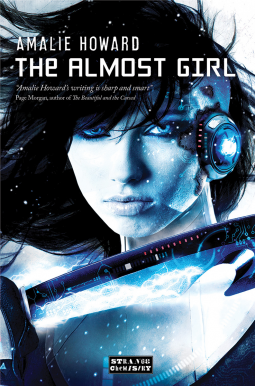
The Almost Girl Reviewed
Why To Read The Almost Girl
The strength of The Almost Girl is its use of what we already know to evoke our feelings. Who hasn't known tattling teacher's pets, naïve goodhearted victims, thuggish jocks, scowling and territorial popularity queens, and teens who notice with great force when an empty room has only a boy and a girl in it? The protagonist's alienness makes all the more credible her alone-ness, her separation from the rest of the world, the weight of what she's doing alone – things we've already sensed from the elements painted with the familiar experiences found in teen life. The fact the protagonist's stakes involve an inter-dimensional war and the life of a dying prince and so forth merely amplify and explain the anxieties and fears Howard paints with our own experience. Who hasn't seen – or been – a student called on the carpet before a teacher? Who hasn't been busted by a parent, smooching in a house thought to be empty? Come on, you at least came close. You've been there. You'll feel it, too.
You'll also feel the personal betrayal and guilt and pride and anger in the various relationships Howard provides with siblings, acquaintances, your best friend, incomprehensible parental figures, and seemingly everything else you did and knew as a teen. Howard leverages this to great effect, so we feel the peculiar fear of being identified, caught, and punished each time we're led into another episode that echoes in our own lives. Howard depicts relationships and interpersonal tensions with great mastery. The author gently pulls the curtain on certain scenes before they go too far for a YA audience, or else fuzzes the camera so we don't get detail you couldn't notice through frosted glass, but this does nothing to impair our view of the conflicts that drive the story.
Howard appears to understand completely that what makes a story work is the characters, their conflicts, and keeping the reader in sympathy with the plight of the protagonist. And make no mistake: this book is about the characters and their insecurities and triumphs in the face of shifting circumstances and relationships and allegiances. If the story closed on an unambiguous Happily Ever After, there might not be a sequel. But the narrator is ambitious and driven so, in a tragic tradition dating back thousands of years, risks the rewards she's fought to win in a bid to fulfill her sense of mission despite the apparently easy alternative of happy retirement.
To watch broken people try to make their way in the world, not knowing whom they can trust, is much more intriguing than many of the fairy-tale worlds assembled for book buyers. And it's exciting to read a yarn about people operating with limited information under pressure. It's easy to sympathize with the main characters. It's particularly delightful to find one's self liking so many of the characters who are in conflict with one another. The Almost Girl is a fun read, and the perspectives from which it draws are surely as accessible to those who are still struggling through their teen years as to those of us who see them only in a rear-view mirror.
Content Warning

de gustibus non est disputandum. (There's no accounting for taste; literally, "there's no argument about the hors d'oeuvres." The brain cross-section shirt really gives new life to the old quote.) As with the review of The Incrementalists, effort is spent to prevent this section from consuming undue space.
The Almost Girl is a book is about people and their relationships and their conflicts. It is not a book about technology or security. If you are a hard-core sci-fi fan who expects to experience shakes if high-tech super-suits from another Universe turn out to use halogen lamps for external illumination, or you think you will be unable to read further if that civilization manufactures thermometers that show temperature measurement that make senses to those of us who grew up using the Fahrenheit scale, you may want to think carefully before upsetting yourself. If you're a military reader with unshakable convictions regarding sentry removal techniques or security procedures, you may need to take a chill pill before getting too far into The Almost Girl. The cover evokes a delightful cyberpunk vibe, and it may attract scifi readers with demanding expectations regarding the made-up gadgets and technologies that inevitably color such work, and it is to some of these folks to whom the warning is largely directed.
Unless your OCD is out of control, or you have a special peeve involving the above, you should enjoy the book juuuust fine.
Conclusion
The Almost Girl uses an impending inter-dimensional war – and the need to keep ahead of a dimension-shifting cadre of conscienceless fast-zombies in supersuits (but no, says the narrator, there's no such thing as zombies) – to raise the stakes on a plausible-feeling teen suffering otherwise ordinary-looking stresses involving boy/girl interactions and siblings and parents and classes and teachers. There's lots of action, to be sure. But the best gem in The Almost Girl is the work we all have in life, to find a place for ourselves however crazy it gets. Amelie Howard's world is just painted a little crazier than yours. It's worth a visit.
Subscribe to:
Posts (Atom)